The Wool-Covered Beast of the Appalachian Mountains
Deep within the mist-shrouded forests of West Virginia, where abandoned logging roads disappear beneath dense hardwood canopies and ancient Appalachian peaks stand silent against the horizon, stories persist of a creature unlike any other in North American folklore.
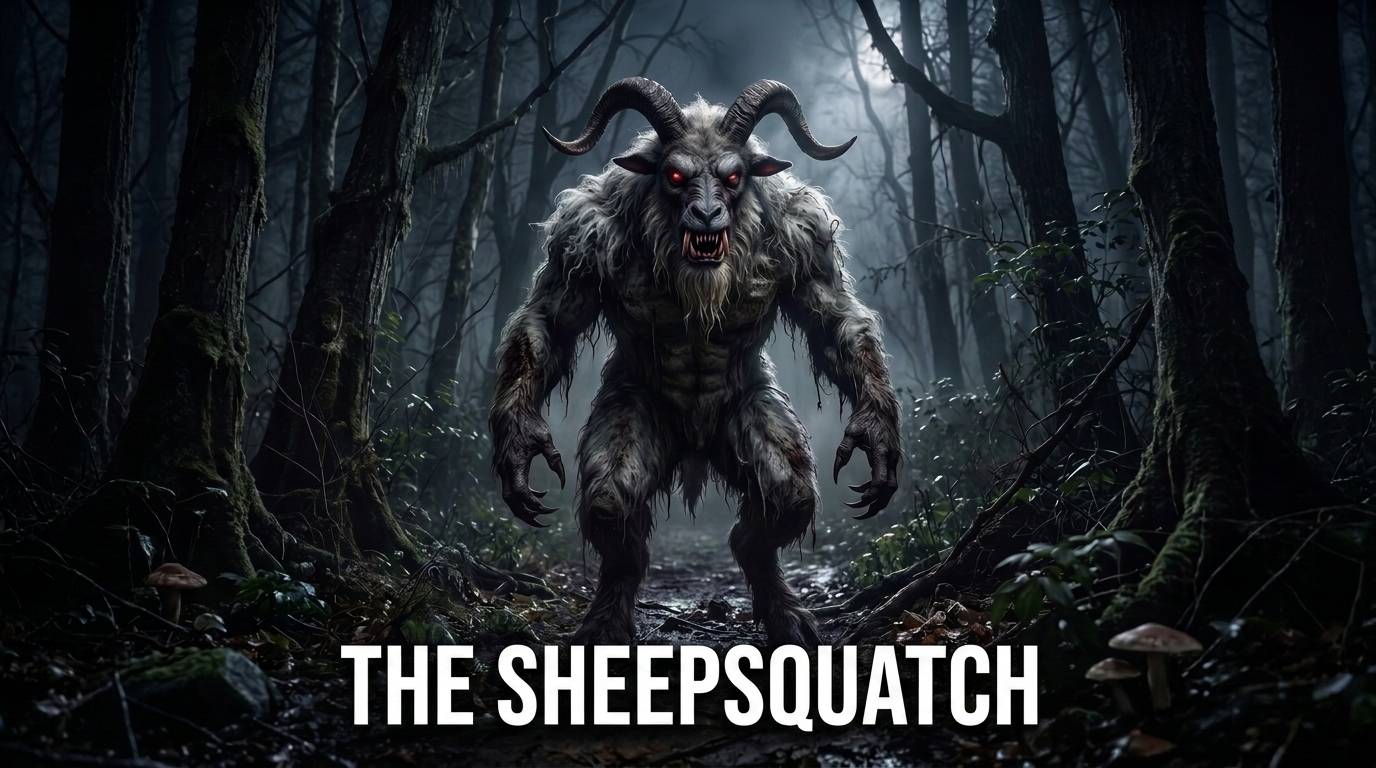
Witnesses describe a towering beast cloaked in thick, dirty-white wool, standing on powerful legs with cloven hooves that echo across the mountainsides.
Massive curled ram’s horns crown its head, while glowing eyes pierce the darkness, watching silently from the tree line before vanishing into the wilderness without a trace.
Known as the Sheepsquatch, this bizarre cryptid occupies a unique place in American legend.
Blending the imposing stature of Bigfoot with the unmistakable features of a monstrous sheep, the creature has become one of West Virginia’s most enduring modern mysteries.
Since the early 1990s, hunters, hikers, motorists, and local residents have reported unsettling encounters across the Appalachian Mountains, describing an enormous wool-covered animal capable of incredible speed and strength, often accompanied by an overwhelming sense of dread.
Unlike many legendary creatures rooted in centuries of folklore, the Sheepsquatch is considered a relatively modern cryptid.
Its legend grew rapidly through a series of reported sightings, local newspaper stories, television coverage, and word-of-mouth accounts, earning a lasting place alongside West Virginia’s most iconic unexplained creatures, including the Mothman, Flatwoods Monster, and Grafton Monster.
Whether interpreted as an undiscovered species, a surviving relic of prehistoric wildlife, a supernatural entity born from Appalachian folklore, or simply a product of mistaken identity and local legend, the Sheepsquatch continues to capture the imagination of cryptozoologists, paranormal investigators, and monster enthusiasts alike.
Today, the creature has transcended its mountain origins to become a recognised figure in popular culture, appearing in documentaries, books, video games such as Fallout 76, and collectible trading card games including MetaZoo.
Yet despite its growing fame, the rugged forests and isolated valleys of West Virginia remain the true heart of the legend, where many believe the wool-covered beast still roams beneath the shadows of the Appalachians.
👹 Physical Appearance

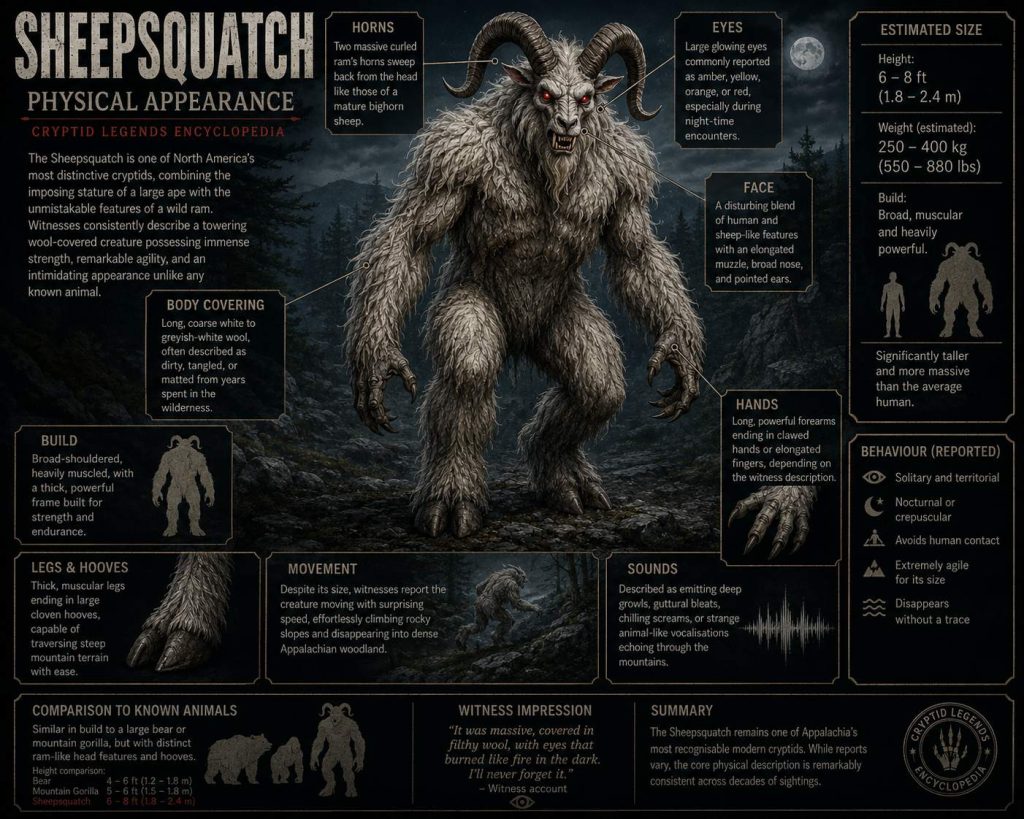
The Sheepsquatch is one of North America’s most distinctive cryptids, combining the imposing stature of a large ape with the unmistakable features of a wild ram.
Witnesses consistently describe a towering wool-covered creature possessing immense strength, remarkable agility, and an intimidating appearance unlike any known animal.
While individual reports vary, the majority share a surprisingly consistent description, helping establish the Sheepsquatch as one of Appalachia’s most recognisable modern cryptids.
Key Physical Characteristics:
- 🐑 Height: Approximately 6–8 feet (1.8–2.4 metres) tall.
- ⚖️ Build: Broad-shouldered, heavily muscled, with a thick, powerful frame.
- 🧶 Body Covering: Long, coarse white to greyish-white wool, often described as dirty, tangled, or matted from years spent in the wilderness.
- 🐏 Horns: Two massive curled ram’s horns, sweeping backward from the head like those of a mature bighorn sheep.
- 👁️ Eyes: Large glowing eyes, commonly reported as amber, yellow, orange, or red, especially during night-time encounters.
- 🐽 Face: A disturbing blend of human and sheep-like features, with an elongated muzzle, broad nose, and pointed ears.
- 🦵 Legs: Thick, muscular legs ending in large cloven hooves, capable of traversing steep mountain terrain with ease.
- 🖐️ Hands: Long, powerful forearms ending in clawed hands or elongated fingers, depending on the witness description.
- 🏃 Movement: Despite its size, witnesses report the creature moving with surprising speed, effortlessly climbing rocky slopes and disappearing into dense Appalachian woodland.
- 🔊 Sounds: Described as emitting deep growls, guttural bleats, chilling screams, or strange animal-like vocalisations echoing through the mountains.
📍 Location & Country
- 📌 Primary Location: Monongahela National Forest, West Virginia
- 🏞️ Region: Appalachian Mountains (Eastern West Virginia)
- 🌍 Country: United States
- 📍 Specific Area: Monongahela National Forest, Boone County, Kanawha State Forest, and the remote mountain wilderness of southern and central West Virginia
- 🗺️ Coordinates (Approx.): 38.540° N, 80.150° W
The Sheepsquatch is most strongly associated with the rugged mountain wilderness of West Virginia, particularly the vast forests surrounding Monongahela National Forest, widely regarded as the creature’s primary stronghold.
Spanning nearly one million acres of protected Appalachian wilderness, the forest provides an ideal setting for one of America’s most elusive modern cryptids.
Although the majority of reported encounters centre around the Monongahela region, sightings have also been documented across several parts of the state, including Boone County, Nicholas County, Fayette County, and the forests surrounding Kanawha State Forest.
🌲 Habitat
The Sheepsquatch is traditionally associated with the remote wilderness of the Appalachian Mountains, particularly the heavily forested regions of West Virginia.
Reports place the creature within areas of dense woodland, steep mountain slopes, secluded valleys, and abandoned logging roads where human activity is limited.
The creature’s legendary habitat is characterised by:
🌲 Dense hardwood forests — providing extensive cover and isolation.
⛰️ Mountain ridges and rocky terrain — matching reports of a powerful creature capable of navigating difficult landscapes.
🌫️ Remote hollows and valleys — areas where sounds can travel unpredictably and sightings are often brief or unclear.
💧 Streams, rivers, and forest clearings — common features throughout the Appalachian wilderness.
The vast, rugged nature of these landscapes has helped shape the Sheepsquatch legend, with the creature often portrayed as a mysterious inhabitant of the deep forests beyond the reach of everyday life.
📖 Background & Legend
Unlike many older Appalachian legends that have roots stretching back centuries, the Sheepsquatch is considered a relatively modern cryptid, with its popularity growing during the late 20th and early 21st centuries.
The legend emerged from the mountain communities of West Virginia, where reports of an unusual sheep-like creature began circulating among local residents, hunters, and cryptid enthusiasts.
The name “Sheepsquatch” itself reflects the creature’s unusual combination of features — the wool and horned appearance of a ram combined with the size and presence traditionally associated with Bigfoot.
Some researchers have suggested that the legend may have developed from older Appalachian stories involving strange animals, wilderness spirits, and unexplained encounters in remote mountain regions.
Others view the Sheepsquatch as part of the broader modern cryptid tradition that grew around creatures such as the Mothman, Flatwoods Monster, and Grafton Monster.
The creature gained wider recognition through cryptozoology publications, online folklore communities, paranormal media, and later appearances in popular culture. While reports remain unverified and interpretations vary, the Sheepsquatch has become a distinctive symbol of Appalachian monster folklore — a creature shaped by the region’s vast forests, isolated landscapes, and enduring tradition of storytelling.
Today, the Sheepsquatch remains one of West Virginia’s most recognisable modern cryptids, representing the continuing evolution of American folklore and the mysteries people associate with the remote Appalachian wilderness.
👣 Sighting History — The Sheepsquatch
Unlike many famous cryptids with one defining encounter, the legend of the Sheepsquatch developed gradually through a combination of older Appalachian folklore and a later wave of modern eyewitness reports.
While the name “Sheepsquatch” became popular during the late 20th century, stories of mysterious white, shaggy creatures roaming the mountains of West Virginia appear to have much older roots.
These early tales, often associated with the regional legend of the “White Thing,” are considered by some cryptid researchers to be part of the folklore lineage that eventually evolved into the modern Sheepsquatch legend.
🌲 The “White Thing” — Early Appalachian Encounters
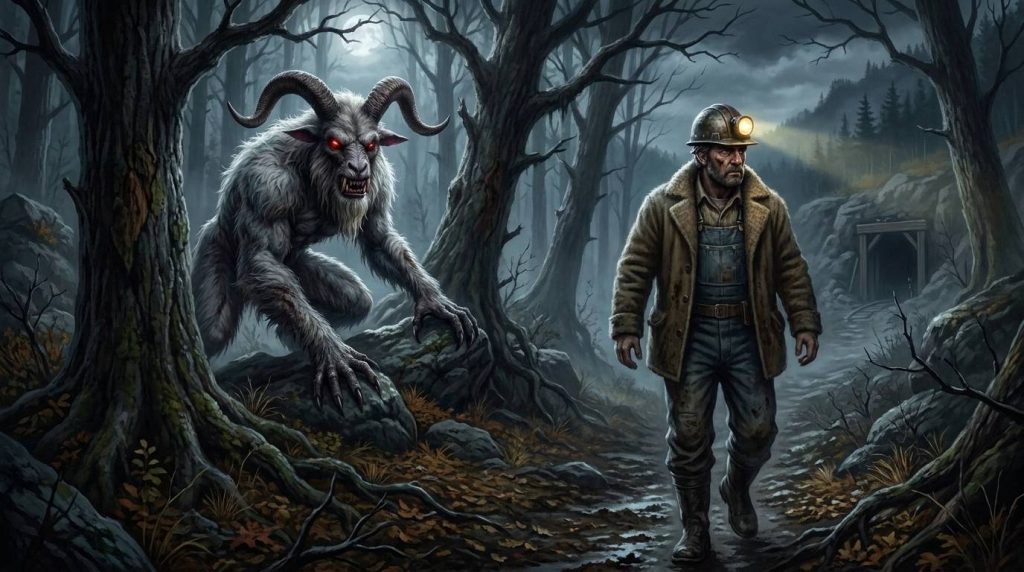
One of the earliest and most frequently discussed accounts connected to the Sheepsquatch tradition is the 1929 encounter of coal miner Frank Kozul in Marion County, West Virginia.
According to the story, Kozul was travelling home after work through the wooded hills when he encountered a strange white creature approximately the size of a large dog. The animal was described as having a pale, shaggy appearance, sharp teeth, and an aggressive nature as it reportedly rushed toward him.
Kozul claimed the creature followed him through the darkness and attempted to attack until he reached the safety of a nearby cemetery, where the animal disappeared. Although the encounter became part of local folklore, no physical evidence was ever produced, leaving the story firmly within the realm of Appalachian legend.
Stories like the Kozul encounter helped establish a recurring theme within West Virginia folklore — mysterious white creatures appearing in remote mountain areas, often described as unusual animals unlike anything familiar to local residents.
📖 The White Thing Tradition & Appalachian Folklore
Throughout the 20th century, stories of a mysterious pale creature continued to circulate throughout parts of Appalachia.
These accounts were later preserved through folklore collections, including work by West Virginia folklorist Ruth Ann Musick, who documented regional tales of strange creatures, spirits, and unexplained encounters.
The White Thing stories were not originally described as the Sheepsquatch and did not always include the famous ram-like horns associated with the modern cryptid. Instead, they represent an older tradition of Appalachian storytelling where strange wilderness creatures became part of local oral history.
Over time, these older legends became blended with modern cryptozoological ideas, eventually contributing to the creation of the Sheepsquatch identity recognised today.
🌲 The 1990s Sightings — The Modern Sheepsquatch Emerges
The Sheepsquatch gained widespread attention during the 1990s, when a series of reported encounters in West Virginia introduced many of the characteristics now associated with the creature.
Unlike the earlier White Thing folklore, these modern accounts frequently described a much larger creature, a towering, wool-covered being with a powerful build, unusual facial features, and sometimes horn-like protrusions.
🚤 The 1994 Boone County River Encounter
One of the most famous modern Sheepsquatch reports came in 1994, when a former U.S. Navy serviceman claimed to encounter a strange creature near a creek in Boone County, West Virginia.
According to the account, the witness observed a large white creature emerge from the forest and approach the water. The animal reportedly drank from the creek before moving away into the surrounding woodland.
The creature was described as extremely large, covered in thick white hair or wool, and unlike any known animal. The encounter became one of the most frequently referenced reports in Sheepsquatch research and helped establish the image of the creature as a massive, elusive inhabitant of Appalachian forests.
🌲 The 1994 Boone County Children’s Encounter
Another widely repeated report from the same period involved two children who claimed to have seen a large white creature near their home in Boone County.
The children reportedly described the creature as resembling a large white bear-like animal. According to the account, the creature rose onto its hind legs before fleeing into the forest, breaking branches as it disappeared.
Although the report remains unverified, it added another recurring feature to the Sheepsquatch legend — a powerful, pale creature capable of moving quickly through dense woodland.
🚗 Later 1990s Encounters
Additional Sheepsquatch sightings continued to circulate throughout West Virginia during the late 1990s and early 2000s.
These reports commonly described encounters occurring near:
🌲 Remote forest roads
⛰️ Appalachian mountain valleys
💧 Streams and rivers
🌫️ Isolated woodland areas
Witness descriptions often included:
🐑 Thick white or grey wool-like hair
🐏 Ram-like horns or unusual head features
👁️ Strange reflective or glowing eyes
🦴 Large, powerful body structure
🌲 Rapid movement through difficult terrain
The consistency of these descriptions helped establish the Sheepsquatch as one of West Virginia’s most recognisable modern cryptids.
🔍 Theories & Explanations
As with many cryptid legends, explanations for Sheepsquatch reports vary.
🐻 Animal Misidentification
Some researchers suggest sightings may involve misidentified wildlife, such as bears, large mammals, or unusual livestock seen under poor conditions.
📖 Folklore Evolution
Others view the Sheepsquatch as an example of Appalachian folklore evolving over time, combining older “White Thing” stories with modern monster traditions.
👣 Unknown Creature Theory
Cryptid enthusiasts point to repeated descriptions of a large white, wool-covered creature as evidence that the legend may be based on an unexplained animal or phenomenon.
🌲 Legacy of the Sightings
The Sheepsquatch represents a unique form of modern folklore, a creature whose legend developed not from one single famous event, but through decades of Appalachian storytelling, eyewitness reports, and regional mystery.
From the early White Thing tales of the 20th century to the modern sightings of the 1990s, the creature has become firmly connected with the forests and mountains of West Virginia.
Whether viewed as an undiscovered animal, a misunderstood encounter, or a product of folklore, the Sheepsquatch remains one of Appalachia’s most fascinating cryptid legends, continuing to inspire researchers, storytellers, and monster enthusiasts around the world.
🎬 Sheepsquatch in Popular Culture
Although the Sheepsquatch originated as a relatively modern Appalachian cryptid legend, the creature has gained significant popularity through video games, trading card games, books, and paranormal media.
Its unusual design, combining a ram, a wool-covered beast, and a Bigfoot-like creature, has made it particularly appealing to modern horror and fantasy creators.
Unlike many cryptids whose popularity grew through decades of folklore before entering mainstream culture, the Sheepsquatch has become a symbol of the modern cryptid era, where internet communities, gaming, and collectible culture have helped transform regional legends into internationally recognised monsters.
🎮 Video Games
🏚️ Fallout 76 — The Sheepsquatch of Appalachia
The most famous mainstream appearance of the Sheepsquatch comes from Bethesda Game Studios’ Fallout 76, which introduced the creature as one of the game’s most memorable cryptid-inspired enemies.
Released as part of the Wild Appalachia update in 2019, the Sheepsquatch was added as a mysterious and extremely powerful creature roaming the post-apocalyptic forests of West Virginia, a fitting location considering the game’s setting is based on the real Appalachian region.
Within the Fallout universe, the Sheepsquatch is presented as a massive, mutated beast covered in thick white fur, with enormous horns, powerful legs, and incredible strength. The creature is designed as a dangerous late-game enemy, combining elements of folklore monsters with the series’ signature themes of mutation, science gone wrong, and post-nuclear wildlife.
Players can encounter different versions of the creature, including:
🐑 Sheepsquatch — the standard legendary creature.
⚡ Imposter Sheepsquatch — a unique robotic disguise created by the mysterious Enclave-linked forces within the game’s story.
🔥 Furious, Legendary, and other variants — featuring enhanced abilities and combat effects.
The Fallout 76 version helped introduce the Sheepsquatch to millions of players worldwide and is now considered one of the cryptid’s defining modern interpretations.
🃏 MetaZoo Trading Card Game — Sheepsquatch
The Sheepsquatch appears as an official Beastie card in the MetaZoo Trading Card Game, bringing the Appalachian cryptid into MetaZoo’s expanding universe of legendary creatures.
🐑 MetaZoo Card Details
- 🃏 Card Name: Sheepsquatch
- 📌 Set: MetaZoo: Cryptid Nation — Seance
- 🔢 Card Number: 15/165
- 👹 Card Type: Beastie
- 🌲 Aura Type: Forest
- ⭐ Rarity: Gold
Within MetaZoo’s lore, the Sheepsquatch fits naturally alongside other forest-based cryptids, reflecting its origins as a mysterious creature associated with the remote wilderness of the Appalachian Mountains.
The card’s inclusion highlights MetaZoo’s focus on bringing lesser-known regional legends into collectible form, placing the Sheepsquatch alongside famous cryptids such as Bigfoot, Mothman, Flatwoods Monster, and Loveland Frogman.
The MetaZoo version has helped introduce the Sheepsquatch legend to a wider audience of collectors and cryptid fans, especially those discovering folklore through trading cards rather than traditional cryptozoology sources.
📚 Sheepsquatch in Cryptozoology & Modern Folklore
Unlike older cryptid legends such as Bigfoot, the Jersey Devil, or the Mothman, the Sheepsquatch is a relatively recent addition to the world of American monster folklore.
Because of its modern origins, the creature has not yet developed a large body of dedicated literature. Instead, Sheepsquatch is most commonly discussed within wider works covering:
📖 Modern cryptozoology encyclopedias
📖 Appalachian monster legends and folklore collections
📖 Bigfoot-related research and wildman literature
📖 Paranormal field guides and regional mystery books
The Sheepsquatch is often examined alongside other unusual West Virginia legends, including:
👽 Mothman of Point Pleasant
🔥 Flatwoods Monster
👹 Grafton Monster
These creatures represent an important part of modern Appalachian folklore — a tradition where strange encounters, local storytelling, media coverage, and community legends continue to create new mysteries.
The Sheepsquatch is particularly interesting because it demonstrates how cryptids can emerge in the modern era. Rather than originating from ancient mythology, the legend developed through reported encounters, regional discussion, and the growing online cryptid community.
In this way, the Sheepsquatch provides an example of folklore still being created today, showing that the world of legendary creatures is not limited to the distant past.
🎬 Sheepsquatch in Movies & Television
With its relatively recent emergence in modern cryptid culture, the Sheepsquatch has yet to achieve the same level of screen recognition as some of North America’s more widely known monster legends.
Unlike many older cryptids that have inspired feature films, television documentaries, and fictional adaptations, the Sheepsquatch currently remains a niche figure within paranormal media and independent monster storytelling.
The creature’s unusual appearance, a large, wool-covered, horned wildman connected to Appalachian folklore, gives it all the ingredients of a classic creature-feature horror legend.
Although it has not yet received a major cinematic adaptation, the Sheepsquatch continues to gain recognition through cryptid communities, artwork, online media, and modern monster culture.
As interest in folklore-inspired horror continues to expand, the Sheepsquatch remains a creature with significant potential for future film and television adaptations.
📺 Television & Documentaries
The Sheepsquatch has appeared in paranormal and cryptozoology programming exploring unexplained creatures of the Appalachian region.
Appearances and discussions have included:
📺 Cryptid-focused documentaries
📺 Paranormal investigation programmes
📺 West Virginia folklore features
📺 Online cryptozoology documentaries
Many programmes examine the Sheepsquatch alongside other Appalachian mysteries, particularly the Mothman legend, due to their shared connection with West Virginia folklore.
📚 Sheepsquatch in Comics, Graphic Novels & Monster Art
The Sheepsquatch has not yet become a major character within mainstream comic book universes or large graphic novel franchises.
Instead, its presence has grown primarily through independent cryptid artwork, online comics, horror illustrations, and monster-themed publications.
As a relatively modern cryptid, the Sheepsquatch has developed alongside the rise of digital art communities, where independent creators have helped shape the creature’s appearance and personality.
The legend has become popular among:
🎨 Cryptid and monster artists
📚 Independent horror creators
🖋️ Anthology and folklore-inspired publications
🌲 Online storytelling communities
The Sheepsquatch’s unusual design combining the familiar image of a sheep with the mystery and fear of an unknown wilderness creature, gives artists a unique opportunity to reinterpret the legend.
Some portrayals emphasise the creature as a terrifying Appalachian predator, while others explore more imaginative or folklore-inspired versions of the creature.
🌲 Legacy in Modern Cryptid Culture
The Sheepsquatch represents the next generation of American monster folklore — a creature born from regional legends but amplified by modern entertainment.
While older cryptids such as Bigfoot and the Jersey Devil have centuries of history behind them, the Sheepsquatch demonstrates how new legends can emerge, evolve, and gain international recognition through:
🎮 Video games
🃏 Trading cards
📚 Cryptid literature
📺 Paranormal media
🌐 Online communities
Today, the Sheepsquatch stands alongside West Virginia’s most famous mysterious creatures, not only as a local Appalachian legend but as a recognised icon of modern cryptid culture.