Beyond Bigfoot: North America’s Regional Wildman Legends
For generations, stories have emerged from the forests, mountains, swamps, and wilderness regions of North America about mysterious creatures that seem to exist somewhere between human and beast.
The legendary Bigfoot and Sasquatch may be the most famous examples, but they are only part of a much larger family of wildman legends found across the continent.
From the swampy waterways of Louisiana, where witnesses have reported encounters with the mysterious Honey Island Swamp Monster, to the forests of Florida’s Everglades where the infamous Skunk Ape is said to roam, each region has developed its own version of the unknown.
In Arkansas, the Fouke Monster became a cultural phenomenon. Arizona has the towering Mogollon Monster. Ohio has the Grassman. Canada has its own mysterious hairy giants, including Ontario’s Old Yellow Top.
Although their names, locations, and descriptions vary, these legends share a common theme: the idea that something unknown may still hide in the wild places beyond civilisation.
This is the story of North America’s regional wildmen, the creatures that live beyond Bigfoot.
🦍 What Is A Wildman Cryptid?

When most people think of mysterious hairy humanoids, the name Bigfoot is usually the first to come to mind.
However, cryptozoology and folklore recognise a much broader family of legendary creatures collectively known as wildmen.
Wildman cryptids are typically described as large, muscular, human-like beings covered in thick hair or fur. Witnesses often report that they walk upright on two legs, possess immense physical strength, and inhabit some of the most remote forests, mountains, swamps, and wilderness areas across North America.
Although descriptions vary from region to region, many accounts share remarkably similar characteristics, including broad shoulders, long arms, powerful builds, distinctive footprints, and an uncanny ability to disappear into dense wilderness before they can be closely observed.
Unlike mythical monsters or supernatural beings, wildman legends occupy a fascinating space between folklore and zoological mystery.
To some, they represent undiscovered primates or surviving relic populations hidden within vast, unexplored landscapes.
To others, they are cultural legends shaped by generations of storytelling, eyewitness accounts, and the enduring mystery of the natural world.
For this reason, wildman serves as a useful umbrella term. While Bigfoot and Sasquatch have become the world’s best-known names for these elusive creatures, they represent only a small part of a much larger family of regional legends.
Across North America, communities have developed their own names, descriptions, and traditions for mysterious hairy humanoids, each reflecting the unique landscapes, history, and folklore of the places they are said to inhabit.
From the misty forests of the Pacific Northwest to the swamps of Louisiana, the Everglades of Florida, the mountains of Arizona, and the woodlands of Appalachia, North America’s regional wildmen continue to inspire curiosity, debate, and countless stories of encounters with something that may still lurk beyond the edge of civilisation.
🦶 Bigfoot and Sasquatch: The Giants That Started It All

No wildman legend has captured the public imagination quite like Bigfoot.
Towering, powerful, and covered in dark hair, this elusive forest giant has become one of the world’s most recognisable cryptids, inspiring decades of expeditions, documentaries, eyewitness accounts, and scientific debate.
Although the names Bigfoot and Sasquatch are often used interchangeably today, they have slightly different origins.
Sasquatch is the older term, rooted in the Indigenous traditions of the Pacific Northwest and derived from the Halkomelem word sásq’ets, referring to a wild or hairy man of the forests.
The name Bigfoot, meanwhile, entered popular culture following the famous 1958 footprint discoveries at Bluff Creek in Northern California, where enormous human-like tracks sparked widespread media attention and helped transform a regional legend into an international mystery.
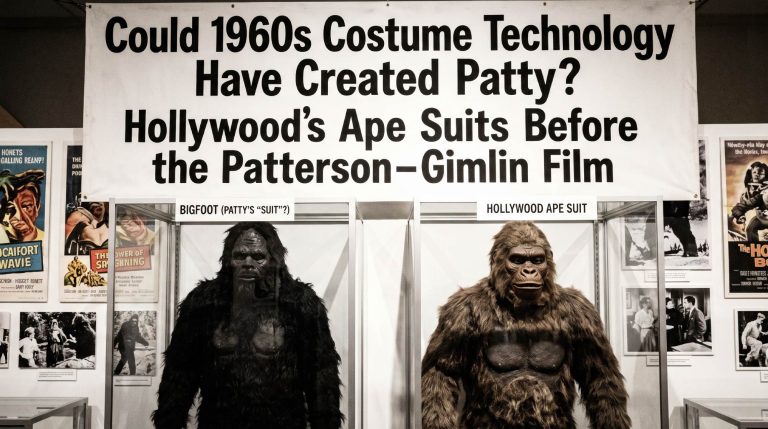
The legend grew even further in 1967 when Roger Patterson and Bob Gimlin filmed a large, hairy, bipedal figure walking across a sandbar at Bluff Creek.
Known today as the Patterson-Gimlin Film, the short piece of footage remains one of the most famous and hotly debated pieces of evidence in cryptozoology, with believers arguing it depicts an unknown primate and skeptics suggesting it was an elaborate hoax.
Nearly six decades later, it continues to fuel discussion among researchers and enthusiasts alike, cementing Bigfoot’s place as the world’s most iconic wildman legend.
🌎 Regional Wildman Legends of North America

As reports spread across North America, it became clear that the Pacific Northwest did not hold a monopoly on mysterious wildmen.
Similar creatures began appearing under different names in forests, swamps, mountains, and remote wilderness regions across the continent.
While each possessed its own local identity and folklore, many shared the same unmistakable characteristics: towering stature, thick hair, immense strength, large footprints, and an uncanny ability to vanish into the landscape.
These regional legends would go on to form one of the richest and most diverse families of cryptids in North American folklore.
🐊 Honey Island Swamp Monster: Louisiana’s Mysterious Swamp Dweller

Deep within the remote wetlands of southeastern Louisiana lies the Honey Island Swamp, a vast wilderness of tangled forests, murky waterways, and ancient cypress trees draped in Spanish moss.
It is a landscape that feels perfectly suited to legends, and among its many mysteries, one creature has become one of America’s most famous regional wildman stories: the Honey Island Swamp Monster, also known as the “Cajun Sasquatch”.
Unlike the towering forest giants of the Pacific Northwest, this mysterious creature is said to inhabit the dark, isolated swamps of Louisiana.
Reports describe a large, hairy humanoid standing around seven feet tall, with greyish hair, yellow or amber eyes, and a powerful build.
Witnesses have often claimed the creature gave off an unpleasant smell, a characteristic that has led some to compare it with other North American wildman legends such as Florida’s Skunk Ape.
The legend gained widespread attention during the 1970s following reports from local residents, particularly those connected with the Honey Island Swamp area.
One of the most famous accounts came from retired Louisiana wildlife photographer Harlan Ford, who claimed to have encountered unusual tracks and later described seeing a strange creature moving through the swamp. Large footprints were reportedly discovered, featuring unusual features including four toes, adding another layer of mystery to the story.
Over the years, the Honey Island Swamp Monster has become deeply connected with Louisiana folklore. Its remote swamp habitat, unusual appearance, and association with one of America’s most atmospheric wilderness regions have helped transform the creature from a local legend into an internationally recognised cryptid.
The creature has also become part of wider cryptid culture, appearing in documentaries, books, artwork, and paranormal investigations. Like many wildman legends, supporters point to eyewitness reports and unexplained encounters, while sceptics suggest possible explanations ranging from misidentified wildlife to folklore growing over time.
Whether viewed as an undiscovered creature, a fascinating piece of regional folklore, or a symbol of the mysteries hidden within America’s wilderness, the Honey Island Swamp Monster remains one of North America’s most memorable wildman legends.
🌴 Skunk Ape: Florida’s Elusive Everglades Wildman

Among the endless wetlands, sawgrass marshes, and tangled forests of southern Florida lies one of America’s most famous wildman legends: the Skunk Ape.
Said to roam the remote wilderness of the Everglades and surrounding areas, this mysterious creature has become Florida’s own unique contribution to the long tradition of North American wildman folklore.
The name “Skunk Ape” comes from one of the legend’s most famous characteristics, a powerful, unpleasant odour reportedly noticed by some witnesses during encounters.
Descriptions of the creature vary, but many reports describe a large, hairy, human-like figure standing between five and seven feet tall, covered in reddish-brown or dark hair, with a powerful build and an intimidating presence.
Like other wildman legends, it is said to move upright on two legs and disappear quickly into the surrounding wilderness.
Stories of unusual creatures in Florida’s swamps have existed for generations, with modern Skunk Ape reports becoming particularly popular during the twentieth century.
The creature’s association with the Everglades has helped shape its identity, as the vast wetlands provide an atmospheric setting filled with hidden waterways, dense vegetation, and areas that remain difficult to explore.
One of the most famous pieces of Skunk Ape-related evidence emerged in 2000, when photographs known as the Myakka Skunk Ape images were sent anonymously to the Sarasota County Sheriff’s Office.
The images appeared to show a large, hairy creature standing near a wooded area, sparking debate among enthusiasts and sceptics alike. While some believe the photographs capture an unknown animal, others suggest alternative explanations, including a person wearing a costume.
Over time, the Skunk Ape has become deeply connected with Florida’s culture and folklore. The creature has appeared in documentaries, books, artwork, roadside attractions, and paranormal investigations, becoming one of the most recognisable regional wildman legends in North America.
Whether viewed as an undiscovered animal, a modern folklore tradition, or simply one of the Everglades’ greatest mysteries, the Skunk Ape represents the enduring fascination with what may still remain hidden within America’s wild places.
🌾 Fouke Monster: Arkansas’ Famous Southern Sasquatch

Nestled among the dense forests and quiet backroads of southern Arkansas lies the small town of Fouke, a place forever linked with one of North America’s most enduring wildman legends.
Known simply as the Fouke Monster, this mysterious hairy humanoid transformed from a series of local sightings into one of the most influential cryptids in American folklore.
Although stories of strange creatures in the region stretch back many years, the legend captured national attention during the early 1970s after several residents reported frightening encounters with a towering, ape-like figure roaming the woodlands surrounding Fouke.
Witnesses described a massive creature standing between seven and eight feet tall, covered in dark hair, with broad shoulders, glowing eyes, and an intimidating presence. Large footprints and unusual sounds reported in the forests only deepened the mystery, drawing curious visitors and investigators to the area.
Unlike many regional wildman legends that remained known only to local communities, the Fouke Monster quickly became a cultural phenomenon.
Newspaper headlines, television coverage, and growing public fascination helped spread the story far beyond the borders of Arkansas.
In 1972, the semi-documentary horror film The Legend of Boggy Creek brought the creature to audiences across the United States, blending eyewitness accounts with dramatic recreations and cementing the Fouke Monster’s place in cryptid history.
The success of the film ensured that the legend would endure for generations. For many people, The Legend of Boggy Creek became their first introduction to cryptozoology, inspiring an interest in Bigfoot, Sasquatch, and countless other mysterious creatures said to inhabit North America’s wilderness.
Today, the Fouke Monster remains a source of local pride and curiosity. Visitors continue to explore the forests surrounding Fouke, hoping to uncover evidence of the elusive creature, while believers point to decades of eyewitness reports as proof that the mystery has never truly disappeared.
Sceptics, meanwhile, suggest the sightings can be explained by misidentified wildlife, folklore, or the power of local storytelling.
Whether regarded as an undiscovered wildman or one of America’s greatest cryptid legends, the Fouke Monster stands as a remarkable example of how a small-town mystery grew into one of the defining stories of modern cryptozoology.
🌄 Mogollon Monster: Arizona’s Mountain Mystery

Rising across central and eastern Arizona, the rugged escarpment known as the Mogollon Rim stretches for more than 200 miles through vast pine forests, deep canyons, and remote mountain wilderness.
It is within this dramatic landscape that one of the American Southwest’s most enduring wildman legends is said to roam, the mysterious Mogollon Monster.
For generations, hikers, campers, hunters, and local residents have reported encounters with a large, hairy humanoid inhabiting the forests surrounding the Mogollon Rim.
Witness descriptions often portray a powerful ape-like creature standing between six and eight feet tall, covered in dark brown or reddish hair, with broad shoulders, long arms, and an imposing build.
Many accounts also mention an overwhelming, unpleasant odour and piercing screams echoing through the forest, adding to the creature’s intimidating reputation.
Although stories of mysterious beings in Arizona’s wilderness stretch back much further, modern reports of the Mogollon Monster became increasingly well known during the twentieth century as newspapers documented unusual sightings from across the region.
As with many North American wildman legends, eyewitnesses described large footprints, fleeting glimpses of a towering figure moving through dense woodland, and strange vocalisations that defied easy explanation.
Unlike the swamp-dwelling Honey Island Swamp Monster or Florida’s elusive Skunk Ape, the Mogollon Monster has become inseparable from Arizona’s mountainous forests.
The sheer size and isolation of the Mogollon Rim have helped preserve the mystery, providing an ideal setting for stories of an elusive creature capable of avoiding human contact for generations.
Today, the Mogollon Monster remains one of the Southwest’s best-known cryptids, inspiring documentaries, books, artwork, and continued interest from cryptozoologists and outdoor enthusiasts alike.
🌲 Grassman: Ohio’s Forest Giant

Across the forests, farmland, and rolling hills of Ohio, stories have emerged of a mysterious wildman known as the Grassman.
Also referred to as the Minerva Monster, this creature represents one of the Midwest’s most fascinating contributions to North America’s long tradition of Bigfoot-style legends.
The name Minerva Monster comes from a series of reported encounters around the town of Minerva, Ohio, during the 1970s.
Residents described seeing a large, hairy, human-like figure moving through the countryside, bringing national attention to what had previously been a local mystery. These sightings helped establish the Grassman as one of Ohio’s best-known regional cryptids.
Descriptions of the creature follow many of the familiar patterns associated with North American wildman reports.
Witnesses have described a powerful, upright figure covered in dark hair, with a large frame, broad shoulders, and great strength. Reports have included unusual footprints, strange sounds coming from the woods, and fleeting glimpses of a creature disappearing into Ohio’s forests and rural landscapes.
One of the most distinctive aspects of the Grassman legend is the reports of unusual structures made from flattened vegetation, sometimes described as nests or sleeping areas. These discoveries added another layer of mystery to the creature and helped separate the Grassman from other regional Bigfoot traditions.
The Grassman is also known for having a more intimidating reputation than some other wildman legends. Certain accounts describe the creature as unusually bold, approaching rural properties, making frightening vocalisations, and displaying behaviour that witnesses interpreted as aggressive or threatening. These stories helped create the image of the Grassman as a powerful and unsettling presence within Ohio’s wilderness.
Over time, the Grassman has become an important part of Ohio folklore, inspiring researchers, cryptid enthusiasts, artwork, and local interest in the mystery. Believers view the reports as possible evidence of an unknown creature, while sceptics suggest explanations ranging from misidentified wildlife to folklore developing around unusual encounters.
Whether considered an undiscovered animal, a regional expression of the wider Sasquatch tradition, or a fascinating piece of Ohio folklore, the Grassman remains one of America’s most memorable wildman legends, a creature that shows how every region can develop its own unique version of the mysterious beings said to roam the wilderness.
🌳 Wood Booger: Virginia’s Appalachian Wildman

Deep within the ancient forests of the Appalachian Mountains, where steep valleys, dense woodland, and isolated communities have shaped generations of local folklore, stories have long been told of mysterious creatures hiding beyond the familiar paths.
Among these legends is the Wood Booger, Virginia’s own contribution to the long tradition of North American wildman mysteries.
The name itself reflects the region’s unique folklore. In Appalachian traditions, the word “booger” was historically used to describe strange, frightening, or unexplained beings said to inhabit the wilderness.
Rather than referring to a modern insult, a “booger” represented something mysterious lurking beyond the safety of human settlements.
The Wood Booger can therefore be understood as a “creature of the woods”, a fitting name for a wildman legend born from the Appalachian landscape.
Descriptions of the creature are similar to many other Bigfoot-type reports across North America. Witnesses have described a large, hairy, human-like figure standing upright, with a powerful build and an ability to disappear quickly into the forest.
Reports often associate the creature with remote woodland areas, where the thick Appalachian forests provide an ideal setting for stories of hidden beings and unexplained encounters.
Unlike some better-known cryptids that gained national attention through famous sightings or films, the Wood Booger remains closely connected to regional folklore.
It represents the Appalachian tradition of storytelling, where mountains, forests, and isolated communities have always provided fertile ground for legends about mysterious creatures beyond the edge of civilisation.
The legend has gained renewed interest through local events, cryptid research groups, artwork, and the wider popularity of Bigfoot culture.
For many enthusiasts, the Wood Booger represents not just a creature mystery, but a continuation of the Appalachian belief that the wilderness still holds secrets waiting to be discovered.
🌲 Tennessee Wildman: A Forgotten American Forest Legend

Across the forests, mountains, and remote wilderness areas of Tennessee, stories have persisted of a mysterious creature known simply as the Tennessee Wildman.
Unlike some of North America’s more famous cryptids, this legend has remained largely hidden from mainstream attention, existing instead as a quieter part of the Appalachian tradition of mysterious beings said to inhabit the wild places beyond human settlements.
Descriptions of the Tennessee Wildman follow many of the familiar patterns associated with North American wildman reports.
Witnesses have described a large, hairy, human-like creature walking upright through wooded areas, often possessing great strength and an ability to move silently through dense forests.
Like many Bigfoot-type legends, reports frequently focus on fleeting encounters, unusual sounds, strange tracks, and glimpses of something unexplained disappearing among the trees.
The creature’s connection to Tennessee’s landscape is central to its identity. The state’s Appalachian mountains, heavily forested valleys, and isolated rural areas provide the perfect backdrop for stories of mysterious wilderness inhabitants.
For generations, mountain communities have shared tales of strange noises in the woods, unexplained sightings, and creatures that seem to exist just beyond the boundary between the known and unknown.
Unlike the famous Bigfoot cases of the Pacific Northwest or the media attention surrounding the Fouke Monster, the Tennessee Wildman represents a more traditional form of folklore.
It is a legend shaped not by one defining event, but by generations of storytelling, local accounts, and the enduring mystery of the Appalachian wilderness.
Today, the Tennessee Wildman remains part of the wider family of North American wildman legends.
🦍 Yahoo: West Virginia’s Appalachian Wildman

Deep within the forested mountains of West Virginia, where Appalachian folklore has been shaped by generations of storytelling and wilderness traditions, tales have long been told of mysterious beings hiding beyond the edges of human settlements.
Among these lesser-known wildman legends is the Yahoo, an elusive creature that represents another fascinating branch of North America’s Bigfoot tradition.
The Yahoo, not to be confused with Australia’s “Yowie” has remained a more regional legend, closely connected with the forests and mountain landscapes of Appalachia.
The creature is generally described as a large, hairy humanoid figure with jet-black hair and a powerful build, walking upright on two legs and possessing many of the familiar characteristics associated with wildman reports across North America.
The name itself is one of the most memorable aspects of the legend. Some accounts describe the creature as producing a loud, unusual cry or call, which helped give rise to the name “Yahoo.”
Like many Appalachian folklore traditions, the legend reflects a long-standing fascination with the mysterious things that may exist within the vast forests surrounding mountain communities.
Reports and stories of the Yahoo share similarities with wider Sasquatch traditions, including descriptions of a towering, hair-covered figure capable of moving quickly and silently through woodland environments.
However, the Yahoo has maintained its own identity as a regional Appalachian mystery rather than simply being another name for Bigfoot.
Unlike modern cryptids that gained popularity through famous photographs, films, or major media attention, the Yahoo represents an older style of folklore, a creature preserved through stories, local traditions, and the enduring mystery of the Appalachian wilderness.
Today, the Yahoo remains one of West Virginia’s more obscure wildman legends.
🍁 Old Yellow Top: Canada’s Golden-Haired Mystery

Beyond the forests of the United States, Canada’s vast wilderness has produced its own fascinating collection of wildman legends.
Among the most unusual is Old Yellow Top, a mysterious Sasquatch-like creature reported around the mining communities of Ontario that became one of Canada’s most enduring wilderness mysteries.
The legend is associated with the rugged landscape surrounding Cobalt, Ontario, a region of rocky hills, forests, and remote wilderness.
During the early twentieth century, several witnesses reported seeing a large, hairy humanoid creature moving through the area.
Unlike many other North American wildman accounts, Old Yellow Top possessed one distinctive feature that separated it from the rest, a striking yellow or golden-coloured patch of hair around its head, giving the creature the name by which it is remembered today.
Descriptions of Old Yellow Top portrayed a powerful, upright creature covered in dark hair, with a large human-like frame and an ability to move quickly through difficult terrain.
Some witnesses initially mistook the figure for a bear before realising they were observing something that appeared to walk on two legs. The combination of its dark body hair and unusual golden head marking made the creature one of the most visually distinctive wildman legends in North America.
The sightings became especially intriguing because they occurred during the early 1900s, decades before Bigfoot became a worldwide cultural phenomenon. Long before the modern Sasquatch craze, reports of a mysterious wild creature were already circulating among communities surrounded by Canada’s forests and mining landscapes.
Over time, Old Yellow Top became an important part of Canadian cryptid folklore. While the legend never reached the same global fame as Bigfoot or Sasquatch, its unusual appearance and historical reports have kept it alive among researchers, writers, and cryptid enthusiasts.
Sometimes, it is the smallest details such as a mysterious golden mane in the wilderness that allow a legend to endure for generations.
🔍 Why Do Wildman Legends Endure?
From the towering forests of the Pacific Northwest to the swamps of Louisiana, the mountains of Arizona, and the wilderness of Canada, stories of mysterious wildmen have appeared across North America for generations.
While each legend has its own unique identity, they all share a common theme: the fascination with what may exist beyond the edges of the known world.
These creatures represent the unexplored places that still capture our imagination, the deep forests, remote mountains, and forgotten landscapes where mystery seems to remain just out of sight.
For some, wildman legends represent the possibility that unknown animals may still exist in the world’s remaining wilderness. For others, they are powerful examples of folklore, shaped by local history, storytelling, and humanity’s natural curiosity about the unknown.
Whether viewed as cryptids, cultural legends, or enduring mysteries, creatures like Bigfoot, the Skunk Ape, the Fouke Monster, the Mogollon Monster, and countless others continue to inspire exploration and wonder.
Perhaps that is the true power of the wildman legend. It reminds us that even in an age of satellites, technology, and endless information, there are still places where mystery survives, and stories waiting to be discovered.