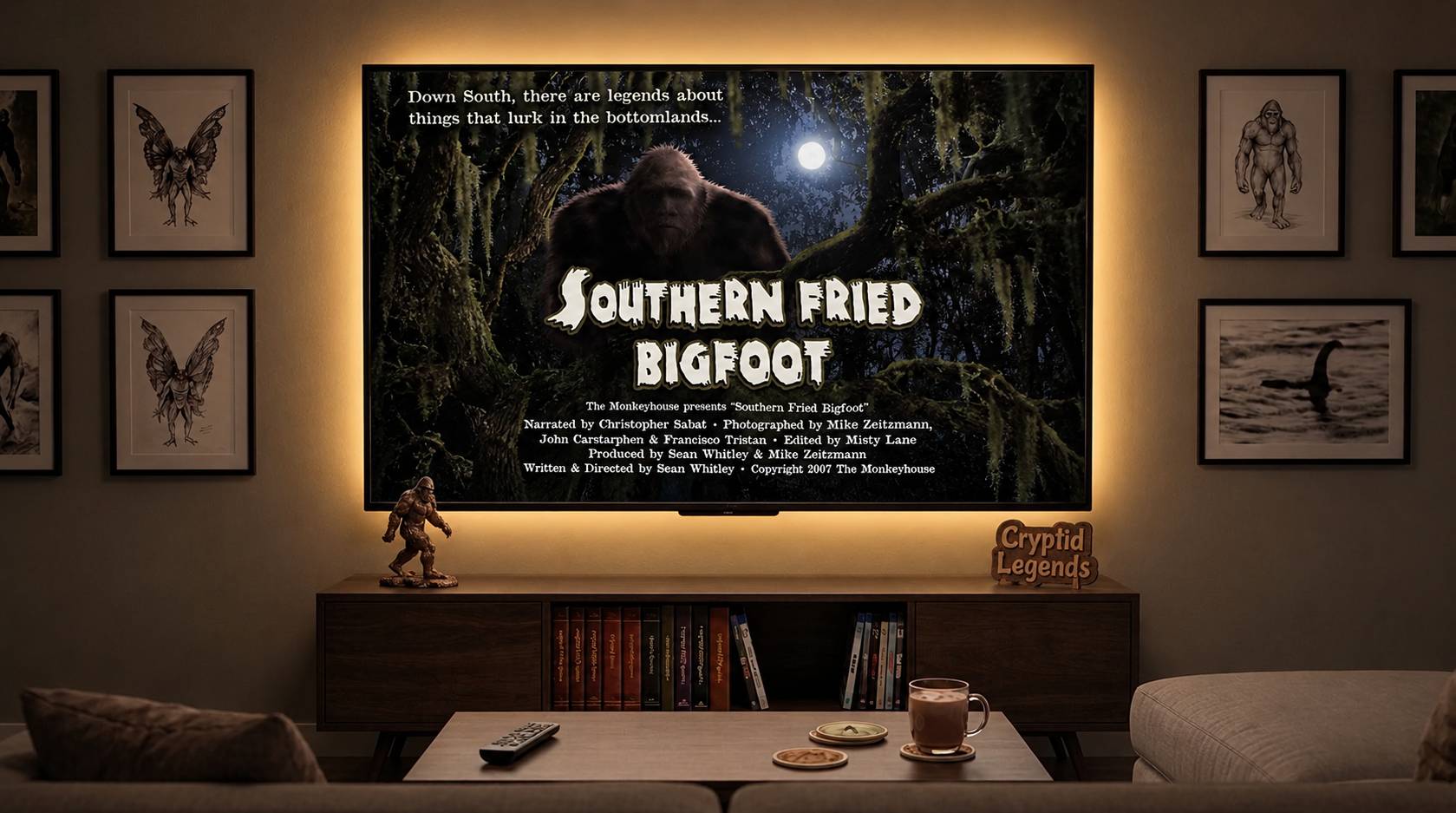
Southern Fried Bigfoot (2007) – The Documentary That Explored Bigfoot Legends Across the American South
Long before Bigfoot documentaries became a familiar fixture of modern streaming platforms, independent filmmaker Sean Whitley set out to explore a very different side of the Sasquatch mystery.
Rather than concentrating on the forests of the Pacific Northwest, Southern Fried Bigfoot travels into the woods, swamps and bottomlands of the American South, where generations of local stories describe their own strange inhabitants.
Released in 2007, Southern Fried Bigfoot is an independently produced documentary examining the legends, eyewitness accounts and possible explanations surrounding reports of large, hairy, human-like creatures across the Southern United States.
The film explores a fascinating regional tradition in which Bigfoot-like creatures can appear under very different names, including the Fouke Monster, Skunk Ape, Honey Island Swamp Monster and Lake Worth Monster.
At the centre of the documentary is a simple question: are these stories merely folklore and misidentifications, or could they represent encounters with an unknown animal?
Whitley doesn’t attempt to answer that question by presenting a single predetermined conclusion. Instead, Southern Fried Bigfoot brings together believers, skeptics, researchers, authors, wildlife experts and people connected directly to the legends.
Among those interviewed are Loren Coleman, Dr. John Bindernagel, Chester Moore Jr., Dr. Vaughn Bryant, Craig Woolheater, Rob Riggs and Sallie Ann Clarke, alongside others with connections to Southern cryptozoology, wildlife, folklore and the individual cases explored by the film.
That approach is one of the documentary’s greatest strengths.
Rather than treating the Southern United States simply as another location on the Bigfoot map, the film shows how regional folklore can shape the way an unknown creature is described and understood.
The Fouke Monster of Arkansas is not quite presented in the same cultural context as Florida’s Skunk Ape, while the Honey Island Swamp Monster and Lake Worth Monster each have their own histories, witnesses and local traditions.
Southern Fried Bigfoot brings these stories together while still allowing them to retain their individual identities.
The documentary is also notable for its use of real locations, interviews, historical material and recreations.
Rather than remaining entirely in a studio environment, the production takes viewers into the landscapes associated with the reports, giving the film a distinctly field-investigation feel.
Its production team included wildlife artist and illustrator Bill Rebsamen, who designed the film’s poster and video-box artwork, while creature performers were used for recreations of reported encounters.
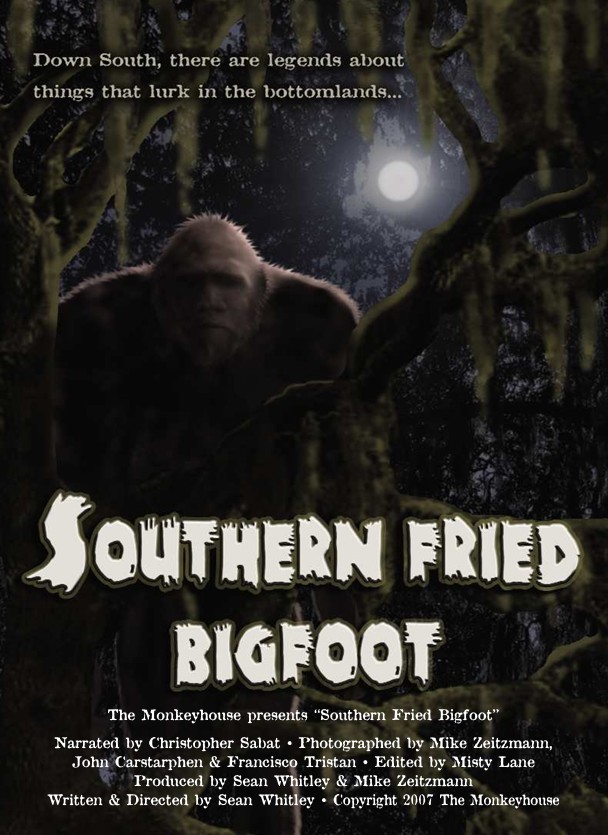
Southern Fried Bigfoot (2007) Cover Artwork By Wildlife Artist Bill Rebsamen
Nearly two decades later, Southern Fried Bigfoot has also found a second life through the modern streaming era.
Sean’s official site lists the documentary across a growing number of streaming services and FAST platforms, including free ad-supported options, making it possible for a new generation of viewers to discover a film originally produced during the early years of the modern cryptozoology documentary boom.
For Cryptid Legends, the documentary is particularly interesting because several of the legends featured in Southern Fried Bigfoot have since become subjects of their own detailed profiles on this site.
Watching the film today therefore offers something more than a look back at a 2007 Bigfoot documentary.
It provides a snapshot of how some of the American South’s most enduring creature legends were being investigated, discussed and presented at the time.
And perhaps that is what makes Southern Fried Bigfoot stand out.
It isn’t simply a film about Bigfoot.
It is a journey through a distinctly Southern tradition of Bigfoot folklore, one populated by boogers, swamp creatures, hairy wildmen, strange footprints and eyewitnesses who remain convinced that something unusual crossed their path.
Bigfoot in the American South
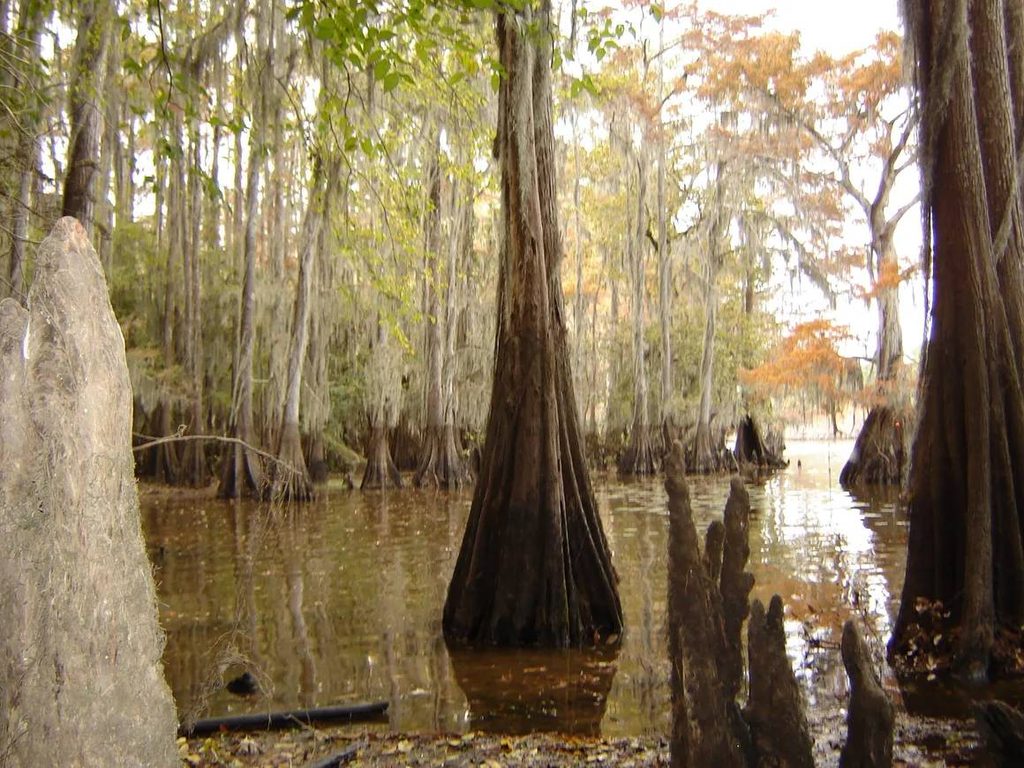
Caddo Lake, Texas – Home Of The Caddo Critter
Southern Fried Bigfoot begins by taking us directly into the heart of the American South, its towns, roads, food, landscapes and culture, before turning our attention towards another part of the region’s identity: stories of strange, hairy creatures said to inhabit its forests and wild places.
For many people, the rural South is closely connected with the outdoors. Hunting, fishing and time spent in the woods are part of everyday life in many communities, and the forests provide habitat for a wide variety of familiar game and wildlife.
But according to some people who have spent time in those same woods, there may be another kind of “booger” out there.
The documentary quickly introduces us to personal accounts of encounters with something much less familiar.
Bill Rebsamen recalls seeing what he describes as an “upright dark thing” crossing the road before disappearing into the timber.
It was a brief encounter, but the description captures one of the recurring characteristics of Southern Bigfoot reports: a fleeting glimpse of something that appears distinctly human or ape-like, yet doesn’t seem to fit any familiar animal.
Patrick Trumble describes another encounter in which he came around a corner into a clearing and suddenly found himself looking at what appeared to be a large, gorilla-like animal.
His description is particularly striking because of its colour. He recalls the creature as being silver-grey over its entire body, rather than the dark colouring normally associated with a silverback gorilla. Then, almost as quickly as it had appeared, the animal took off at extraordinary speed and disappeared into the brush.
Another account comes from author Rob Riggs, who recalls being in a deer stand roughly an hour before sunrise when he heard an extraordinary howling sound coming from the woods. The noise was so loud and unfamiliar that he says he could not conceive of it being produced by any animal he knew.
These are very different experiences, an upright figure crossing a road, a large ape-like animal encountered in a clearing, and an unexplained vocalisation heard in the darkness, but together they introduce one of the documentary’s central themes:
Bigfoot is not simply a Pacific Northwest legend.
The image most commonly associated with Bigfoot often comes from the Pacific Northwest: vast forests, rugged mountains, remote wilderness and seemingly endless stretches of land where an unknown animal might theoretically remain hidden.
It is an image reinforced by some of the most famous photographs, films and footprint discoveries associated with Sasquatch.
But the American South has its own forests, wetlands, river bottoms, timberlands and remote rural areas, and it has its own long history of stories about hairy wildmen.
Craig Woolheater, of the Texas Bigfoot Research Conservancy, makes this broader geographical point in the documentary, discussing the widespread distribution of reported Bigfoot encounters across the United States and the sheer concentration of Bigfoot reports.
Dr. John Bindernagel then addresses one of the assumptions that can influence how we think about the subject.
When people imagine the Pacific Northwest, it is easy to picture enormous expanses of dark, dense and apparently untouched wilderness. The South, by contrast, can sometimes be imagined primarily through its developed areas, roads, towns, shopping centres and highways.
But that is only one part of the picture.
The Southern United States contains enormous areas of forest and other suitable wildlife habitat, much of it divided between private properties, smaller woodland blocks and developed areas rather than existing as one uninterrupted wilderness.
Texas alone illustrates just how easy it is to underestimate this. The Texas A&M Forest Service currently estimates that the state contains around 59 million acres of forest land, more than any other U.S. state except Alaska.
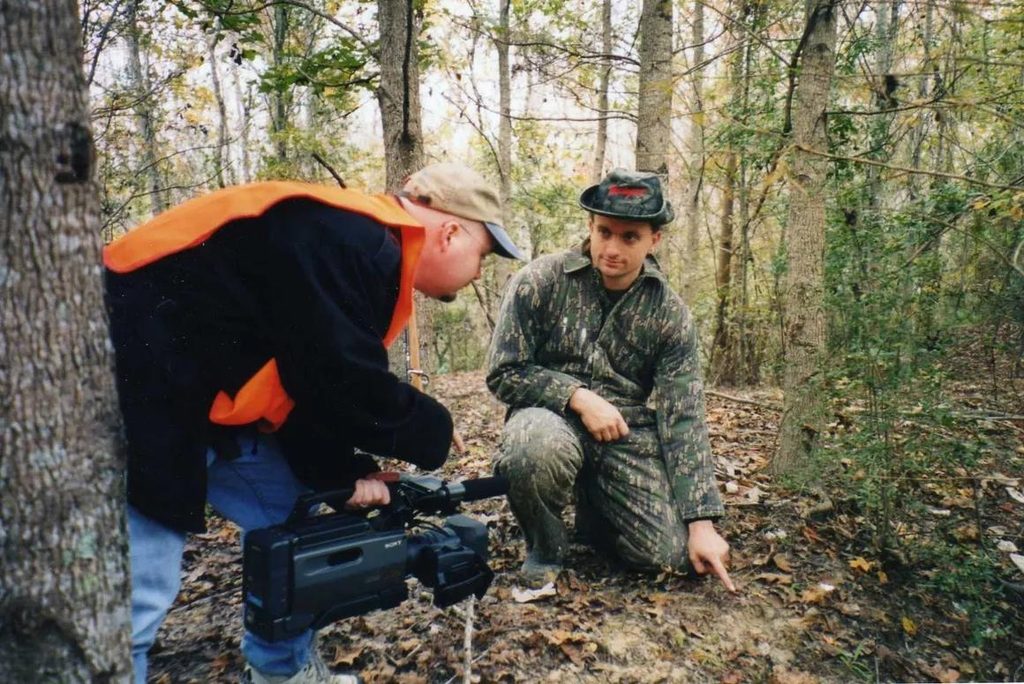
Chester Moore Jr shows director Sean Whitley potential footprint track evidence on location in Southeast Texas
That is where Chester Moore Jr. makes an important point in the documentary. The question isn’t necessarily whether Texas looks like the stereotypical Pacific Northwest wilderness. Much of its habitat is fragmented and subdivided, but the total amount of forested habitat remains enormous.
And that distinction matters.
A landscape does not have to resemble the remote forests of Washington or Oregon to contain substantial wildlife habitat. Texas includes pine forests in the east, cross timbers, oak and mesquite woodlands, juniper-pine habitats and other forested environments spread across an enormous state.
The same broader principle applies throughout the South.
The documentary therefore begins to shift our perception of where a Bigfoot legend ought to exist. The South may be heavily populated and developed in many areas, but beyond the highways and towns lies a much more complex landscape, one containing millions of acres of forest, wetlands and other habitats.
It is within this landscape that the Southern hairy wildman tradition has developed.
And as Southern Fried Bigfoot begins moving deeper into the history behind these stories, the documentary turns towards another important part of that tradition: the older Indigenous folklore and stories of hairy, wild or human-like beings that existed long before the modern term “Bigfoot” became popular.
The Southern landscape, its people and its folklore therefore provide the foundation for the stories that follow.
Before we meet the individual legends, the documentary first asks us to look at the South itself, and understand why Bigfoot folklore was never confined to the Pacific Northwest.
The Four Featured American South Legends
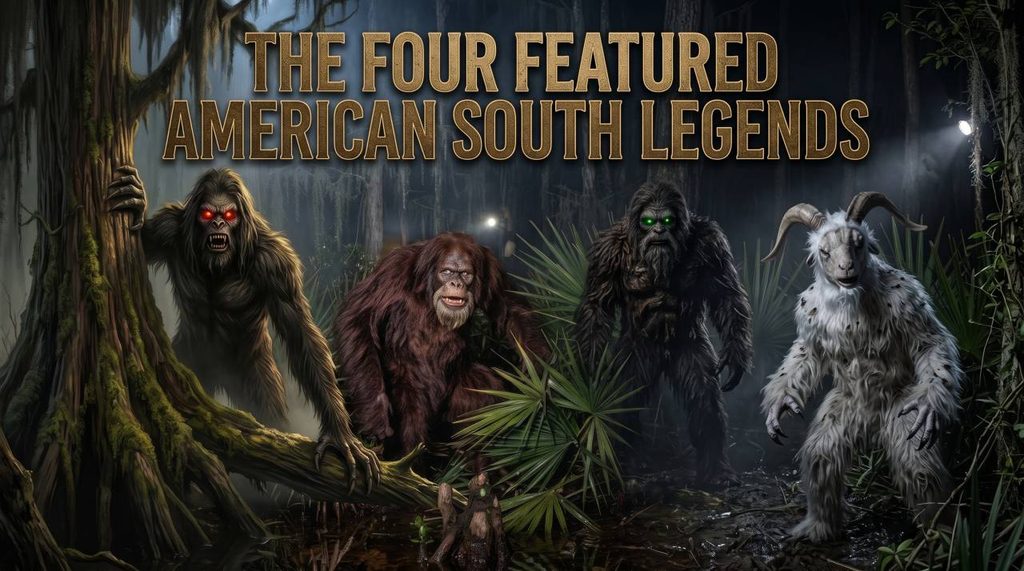
Having introduced us to the wider tradition of Southern hairy wildmen, Southern Fried Bigfoot begins taking us deeper into some of the individual legends that have helped shape the American South’s cryptid landscape.
For Cryptid Legends, this is where the documentary becomes particularly familiar territory.
Four of the cases featured in Sean Whitley’s film are among the legends we have explored in depth ourselves: the Fouke Monster, the Skunk Ape, the Honey Island Swamp Monster and the Lake Worth Monster.
Although all four have become associated with the broader Bigfoot phenomenon, each has developed its own distinctive identity, history and local folklore.
The Fouke Monster emerged from the small town of Fouke, Arkansas, becoming one of the most famous Southern hairy-creature legends following a series of reports in the early 1970s.
The Skunk Ape belongs to the swamps and wilderness of the American Southeast, particularly Florida, where stories of a foul-smelling, ape-like creature have become deeply embedded in regional folklore.
Louisiana’s Honey Island Swamp Monster carries a very different atmosphere, with its legend intertwined with the remote wetlands and bayous of one of the South’s most evocative landscapes.
And in Texas, the Lake Worth Monster occupies a special place in the history of American monster lore. Unlike some of the more remote wilderness legends, the Lake Worth reports unfolded remarkably close to the city of Fort Worth, helping create one of the most unusual chapters in the history of Southern cryptozoology.
What makes Southern Fried Bigfoot particularly interesting is the opportunity to see these legends side by side. They come from different states, different landscapes and different local traditions, yet each has become part of the much larger cultural story surrounding Bigfoot and the American hairy wildman.
The documentary doesn’t simply give us four versions of the same creature. Instead, it takes us from Arkansas to Florida, Louisiana to Texas, showing how the idea of a mysterious hairy creature has taken on different forms across the Southern United States.
And as we revisit each legend through the documentary, we’ll also look beyond what appears on screen.
So, rather than treating these four segments as a straightforward recap, we’ll follow Southern Fried Bigfoot into each legend and explore the stories, the people, the places and the history behind the film’s journey through Southern cryptid country.
🐾 The Fouke Monster
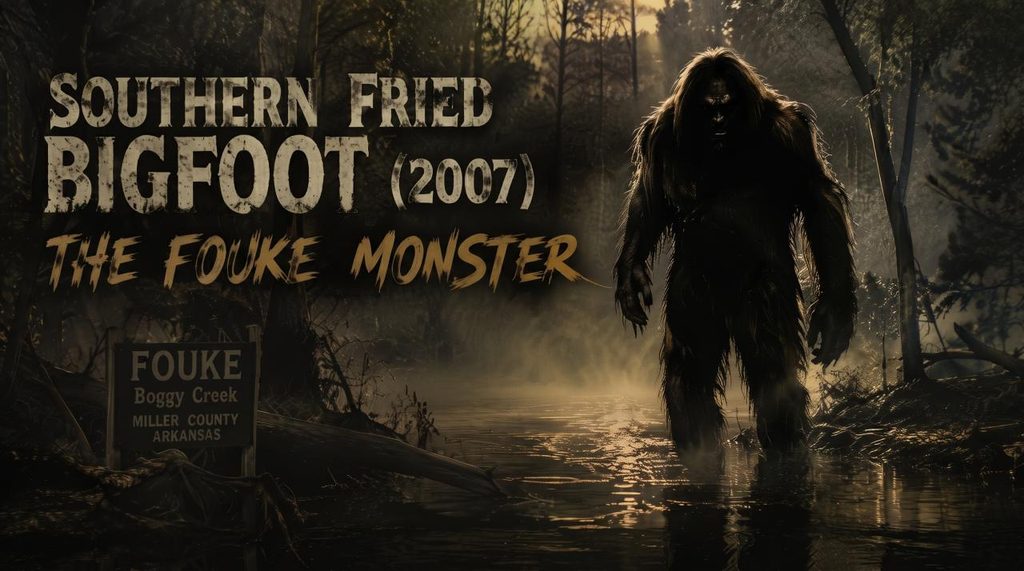
Our journey through Southern Fried Bigfoot begins in Fouke, Arkansas, a small community whose name has become inseparable from one of America’s most famous hairy-wildman legends.
The Fouke Monster is traditionally described as a large, hairy, ape-like creature reported around the Fouke area and neighbouring parts of Miller County, Arkansas.
The legend became nationally known during the early 1970s following a series of reported encounters, most famously the account associated with the Sutton family, and was subsequently immortalised in the 1972 film The Legend of Boggy Creek.
For Southern Fried Bigfoot, however, Fouke is more than simply the location of another Bigfoot sighting.
Sean takes us into the community and explores how the legend became part of the area’s identity.
One of the interesting discussions comes from Chester Moore Jr., who draws attention to a curious difference between reported Bigfoot tracks from different parts of North America.
While the famous Pacific Northwest footprint tradition is generally associated with five-toed tracks, Southern reports, including those attributed to the Fouke Monster, have sometimes produced tracks described as having three, four or five toes.
Moore discusses a possible explanation for this variation, proposing that inbreeding within isolated populations could potentially account for differences in physical characteristics such as toe number.
This is presented as a hypothesis rather than an established explanation, but it provides an intriguing example of the kinds of biological questions raised when comparing reports from different regions.
The Fouke Monster also has a particularly intimidating reputation within Southern cryptid lore.
Loren Coleman describes the creature as having a more aggressive and frightening character than the relatively elusive image often associated with Bigfoot elsewhere.
He also discusses the Fouke tracks and notes their reported three-toed appearance, adding another dimension to the documentary’s examination of the legend.
But some of the most interesting material comes not from researchers, but from people connected with Fouke itself.
Rather than simply presenting a collection of famous case details, the documentary gives authors and local individuals an opportunity to talk about what it was like to grow up with the Fouke Monster story in the background.
Their recollections help show how a cryptid legend can become part of a community’s folklore, with stories passed between generations and encounters remembered alongside the ordinary experiences of life in a small Southern town.
Some contributors also discuss their own experiences and potential encounters, giving the Fouke section a distinctly personal quality.
Rather than revealing every detail of their stories here, these accounts are best experienced through the documentary itself, where the people involved can explain what they remember in their own words.
From Local Legend to Cult Classic
The Fouke Monster’s cultural impact extends far beyond the original reports.
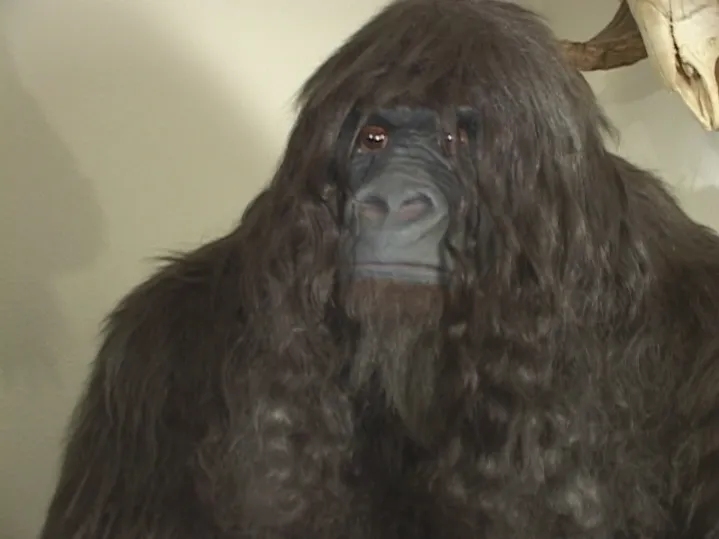
Fouke Monster Bigfoot Display Made By Chester Moore Jr
Southern Fried Bigfoot also highlights the legend of The Legend of Boggy Creek, Charles B. Pierce’s 1972 docudrama that transformed the Fouke story from a regional Arkansas legend into a cult classic of cryptid cinema, helping carry the creature’s name far beyond the town itself.
The film occupies an important place in the history of American cryptid cinema, blending eyewitness accounts, dramatized recreations and the atmosphere of the Fouke area itself.
Southern Fried Bigfoot also takes us to Monster Mart, the Fouke attraction dedicated to the creature and its enduring place in local culture.
It provides a fitting reminder that the Fouke Monster is no longer simply a collection of old reports, it has become part of the town’s identity and a lasting piece of American cryptid history.
For a documentary exploring Southern Bigfoot legends, the Fouke Monster is an excellent place to begin.
It brings together eyewitness accounts, reported footprints, local folklore, and the way a small-town story can grow into something much larger through books, film and popular culture.
From the forests and back roads of Fouke, Southern Fried Bigfoot then heads southwest into Texas, where another famous hairy creature became part of local folklore around Fort Worth.
Our next stop is Greer Island and the Lake Worth Monster.
🐐 The Lake Worth Monster
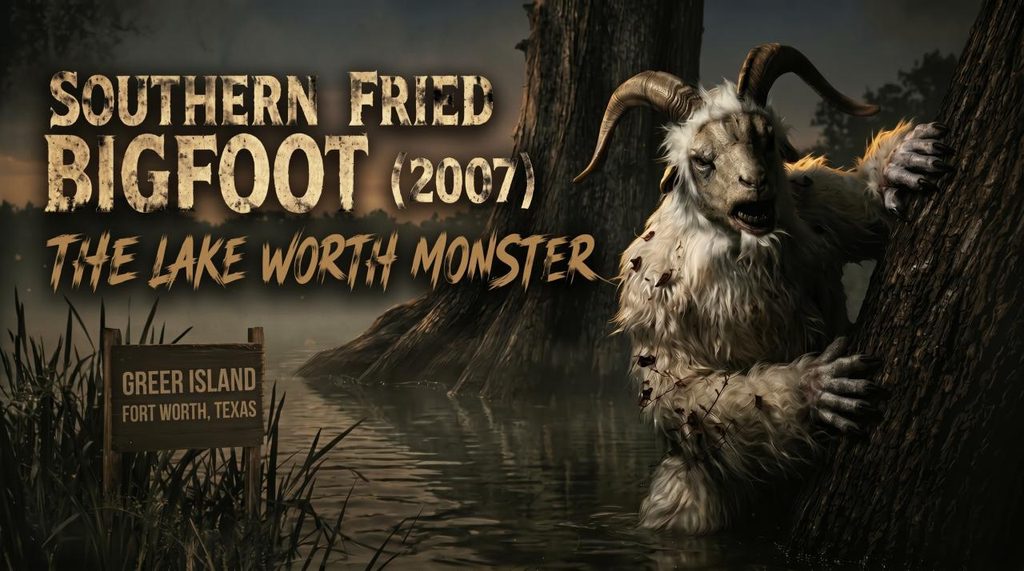
Of all the legends featured in Southern Fried Bigfoot, the Lake Worth Monster is particularly close to home for Cryptid Legends.
It is one of my own favourite cryptid cases, and unlike some legends separated from us by thousands of miles, this is one where the landscape of the story can still be visited today.
Greer Island, the shores of Lake Worth and the surrounding Fort Worth Nature Center & Refuge remain tangible pieces of the setting in which the strange events of 1969 unfolded.
The documentary begins by showing just how unexpected this setting is. Fort Worth is a modern metropolitan city, seemingly a world away from the remote wilderness that many people associate with Bigfoot and other hairy wildman legends.
Yet sitting on the shores of Lake Worth is the Fort Worth Nature Center & Refuge, a vast natural area of woodland, water and wildlife.
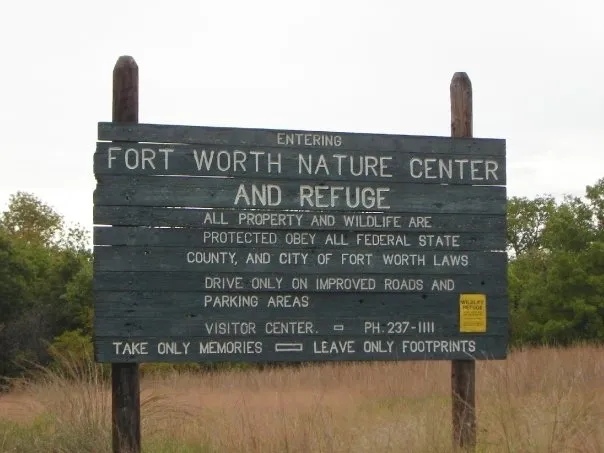
Sign at the Fort Worth Nature Center – The Home Of The Lake Worth Monster
Even its simple message to visitors — “Take Only Memories. Leave Only Footprints.” — feels particularly appropriate when you consider the mystery that once brought hundreds of people into these very surroundings.
It is here that Southern Fried Bigfoot introduces one of Texas’s most enduring legends: the Lake Worth Monster, also known locally as the Goat-Man.
The first reports emerged in July 1969, when witnesses near Greer Island described a strange creature that was variously portrayed as a large, hairy, half-man, half-goat figure, sometimes with fur and scales.
The earliest encounters quickly became increasingly dramatic. One account involved the creature reportedly leaping onto a vehicle, while another became perhaps the most famous incident of the entire case: the alleged throwing of an automobile tire and rim towards a group of people gathered near the lake.
Contemporary newspaper reporting recorded the tire being thrown hundreds of feet, helping send the story rapidly beyond Fort Worth.
As word spread, the Lake Worth Monster became something of a phenomenon. People began travelling to the lake at night hoping to see the creature for themselves, and the atmosphere became increasingly tense.
The documentary brings us into this extraordinary period through the recollections of Sallie Ann Clarke, an investigator and author who became closely associated with the legend.
Clarke recalled that on the first night she became involved, around 300 people had gathered in the area.
Some regarded the creature as a genuine menace, while others were determined to find it for themselves.
The situation became particularly charged as people arrived carrying firearms and other weapons, turning the search for a mysterious creature into a potentially dangerous nighttime spectacle.
Rather than simply repeating the newspaper stories, Southern Fried Bigfoot allows Clarke to recount her own experiences investigating the lake.
She spent considerable time around the area during the aftermath of the sightings and reported finding unusually large tracks during one of her investigations.
The measurements she gave were approximately 16 inches long and 5½ inches wide, adding another intriguing element to the collection of alleged physical evidence surrounding the case.
Clarke eventually put her experiences and research into her book, The Lake Worth Monster of Greer Island, Ft. Worth, Texas, published in 1969. The book became an important part of the legend’s history and preserved many of the stories and accounts surrounding the extraordinary events of that summer.
Perhaps most interestingly, Clarke also described eventually seeing the creature herself during one of her late-night vigils.
Her description was not necessarily the classic goat-headed monster suggested by some of the earliest reports. Instead, she described what appeared to be a large, white-furred, Bigfoot-like creature.
That difference is fascinating because it demonstrates just how varied the descriptions of the Lake Worth Monster could be, even among people investigating the same legend.
The documentary then turns to another intriguing piece of the case: Allen Plaster. While many of those who went searching for the monster arrived armed with weapons, Plaster brought something rather different, a camera.
In November 1969, he reportedly encountered a large white shape near Greer Island and managed to capture it on a Polaroid photograph. The resulting image is still regarded as the most famous alleged photographic evidence connected with the Lake Worth Monster.
Whatever the photograph actually depicts, it remains an important part of the story because it gives the legend something unusual: an image that can still be examined and debated more than half a century later.
There is also a personal connection between this section of the documentary and the history of the Lake Worth Monster that makes Southern Fried Bigfoot particularly valuable.
Director Sean Whitley interviewed the late Sallie Ann Clarke for the documentary, which Sean has told Cryptid Legends took place around 2003.
In Clarke’s obituary, Sean himself recalled that it was an honour and a pleasure to meet her and that he would never forget her kindness to him and his cameraman.
Sean has also explained to us that she had fascinating stories and recollections from her experiences with the Lake Worth Monster.
Even more importantly, he later allowed author Lyle Blackburn to use transcripts from that interview with Clarke for Blackburn’s book Lake Worth Monster: The True Story of the Greer Island Goatman.
That gives this portion of Southern Fried Bigfoot an unusual value beyond simply documenting an old cryptid legend. Sean was able to record the recollections of someone who had personally investigated the case and who had become one of its most important chroniclers, preserving her voice for future generations.
Sean’s connection to the Lake Worth Monster didn’t end when filming wrapped. Years ago, he donated the mask used for the documentary’s Lake Worth Monster recreations to the Fort Worth Nature Center.

Lake Worth Monster Mask – Used In Southern Fried Bigfoot (2007) – Part of Paige Frantz’s Lake Worth Monster Exhibit Currently At Forth Worth City Hall
Having filmed at the Nature Center and taken part in the first few Lake Worth Monster Bashes during Michelle Villafranca’s time there, Sean felt it was an appropriate place for the mask to remain.
Today, that piece of the legend has found another public home, appearing in Paige Frantz’s Lake Worth Monster Exhibit currently on display at Fort Worth City Hall, an exhibit we recently covered here at Cryptid Legends.
And then, almost as suddenly as the creature had appeared, the frenzy surrounding the Lake Worth Monster faded away.
The sightings diminished, the crowds disappeared and the creature itself became part of local folklore.
Today, the landscape around Greer Island forms part of the Fort Worth Nature Center & Refuge, meaning that visitors can still stand in the same general environment where the 1969 reports unfolded.
For Cryptid Legends, that is what makes the Lake Worth Monster such an interesting case. The original reports, the crowds, the footprints, Sallie Ann Clarke’s investigations, Allen Plaster’s photograph and the later preservation of the story have all become layers of the same legend.
And because the landscape itself remains accessible, the Lake Worth Monster is one of those cases where the history does not feel entirely confined to the pages of an old newspaper.
But Southern Fried Bigfoot isn’t staying in Texas for long.
From the wooded shores of Lake Worth, the documentary heads east into Louisiana and into another landscape where stories of a mysterious hairy creature have become deeply embedded in local folklore, the Honey Island Swamp Monster.
🐊 The Honey Island Swamp Monster
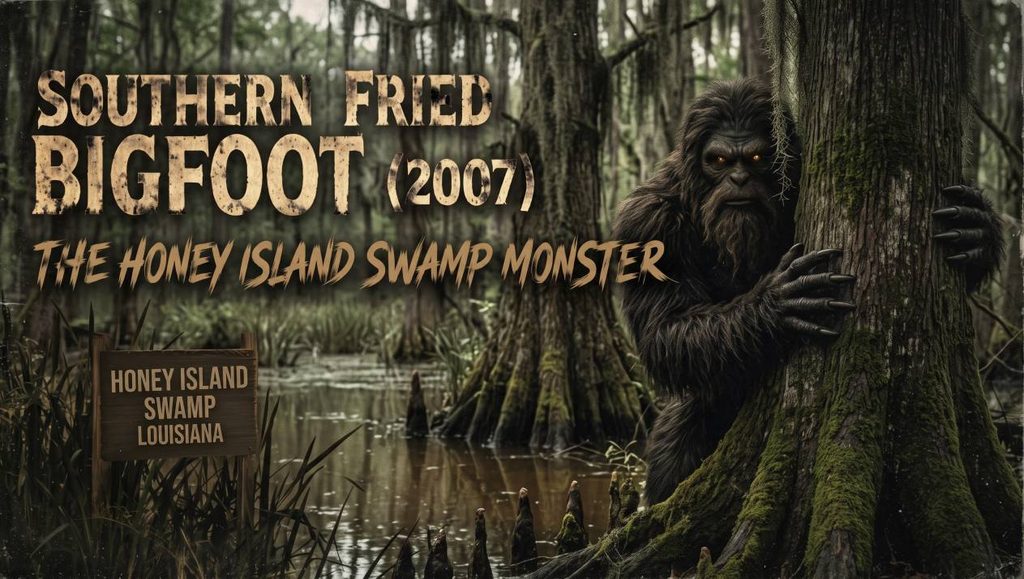
Like the Lake Worth Monster, the Honey Island Swamp Monster is one of my favourite cryptids featured in Southern Fried Bigfoot.
The documentary takes us deep into the Louisiana swamp, introducing us to a landscape of dark waterways, cypress trees and thick vegetation where wildlife can be encountered around almost every bend.
Alligators are an obvious part of the environment, but the swamp is also home to raccoons, deer, black bears and a remarkable variety of birds and other wildlife.
Honey Island is a vast tract of bottomland between the East Pearl and West Pearl Rivers, and even modern swamp tours emphasise just how rich its wildlife is.
But according to local legend, there is another creature moving through those waters and forests.
The Honey Island Swamp Monster is generally described as a large, hairy, bipedal creature, often compared with Bigfoot but possessing characteristics that set the legend apart.
It has become deeply associated with the swamp and with Louisiana folklore, with reported descriptions varying considerably over the years.
The documentary introduces us to some of those stories through Barry Bagert, a boat operator associated with Honey Island swamp tours, who recounts accounts of encounters from the area.
One of the more unusual aspects of the Honey Island case becomes apparent when the documentary turns to the alleged footprints.
Rather than resembling the familiar five-toed human-like tracks usually associated with Sasquatch reports, the Honey Island casts have a distinctly different appearance.
They have been described as four-toed and webbed, with the shape of the print looking remarkably different from the classic Bigfoot footprint.
One description of a cast notes three long toes positioned together with a fourth set farther back, producing an appearance that has been compared to an alligator track as much as a primate footprint.
That difference naturally raises an important question: what actually made the tracks?
Southern Fried Bigfoot doesn’t simply present the footprints as proof of an unknown creature. Possible explanations are discussed, including the possibility of deliberate hoaxing or the misidentification of tracks left by animals already known to inhabit the swamp.
The documentary then brings in one of the world’s leading cryptozoologists Loren Coleman, who had studied the Honey Island footprints and spoken with a number of experts while researching the case.
Coleman’s interpretation is particularly interesting because, despite the creature being associated with Bigfoot, he considers many of the alleged tracks to be more consistent with alligator tracks.
It is an example of the documentary’s willingness to put the physical evidence under examination rather than simply accepting the legend at face value.
And in a place like Honey Island Swamp, there is certainly no shortage of opportunities for tracks and movements to be misunderstood. The swamp is home to an extraordinary range of wildlife, including alligators and other animals capable of leaving unusual impressions in mud and soft ground.
But Sean’s documentary doesn’t stop with the Honey Island Swamp Monster itself. It also widens the lens to look at the broader tradition of strange creatures and supernatural beings found throughout Louisiana.
We are taken to Audubon Zoo in New Orleans, where the Louisiana Swamp exhibit celebrates the wildlife and folklore of the region.
The exhibit includes the familiar creatures of the Louisiana wetlands, but it also acknowledges the state’s stranger traditions, including the Loup-garou, more commonly known in Louisiana as the Rougarou, a legendary werewolf-like creature of Cajun and Louisiana folklore.
It is a fitting reminder that the Honey Island Swamp Monster doesn’t exist in isolation. Louisiana has a long tradition of stories about mysterious beings inhabiting its forests, swamps and bayous, and these legends have become part of the cultural landscape alongside the very real wildlife that inspired them.
For Cryptid Legends, the Audubon sequence is particularly fun because Sean even captured the Loup-garou display inside the Louisiana Swamp exhibit, giving us a glimpse of how these legends have been preserved and presented alongside Louisiana’s natural history.
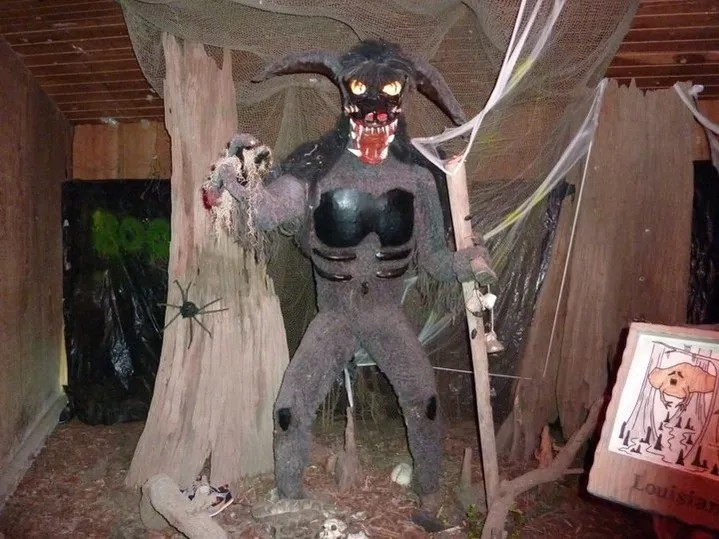
Loup-garou (Rougarou) display inside the Louisiana Swamp exhibit at Audubon Zoo in New Orleans
The Honey Island Swamp Monster therefore leaves us with an interesting mixture of possibilities.
There are eyewitness stories, unusual footprints and a creature that has become firmly embedded in local folklore, but there are also perfectly ordinary animals, questions surrounding the tracks and competing explanations for what people may have encountered.
And with Louisiana’s swamps behind us, Southern Fried Bigfoot moves on to its final featured legend.
We head south into Florida and into the vast wetlands of the Everglades, where another famous Southern hairy wildman has become one of America’s best-known cryptid legends, the Skunk Ape.
🦨 The Skunk Ape
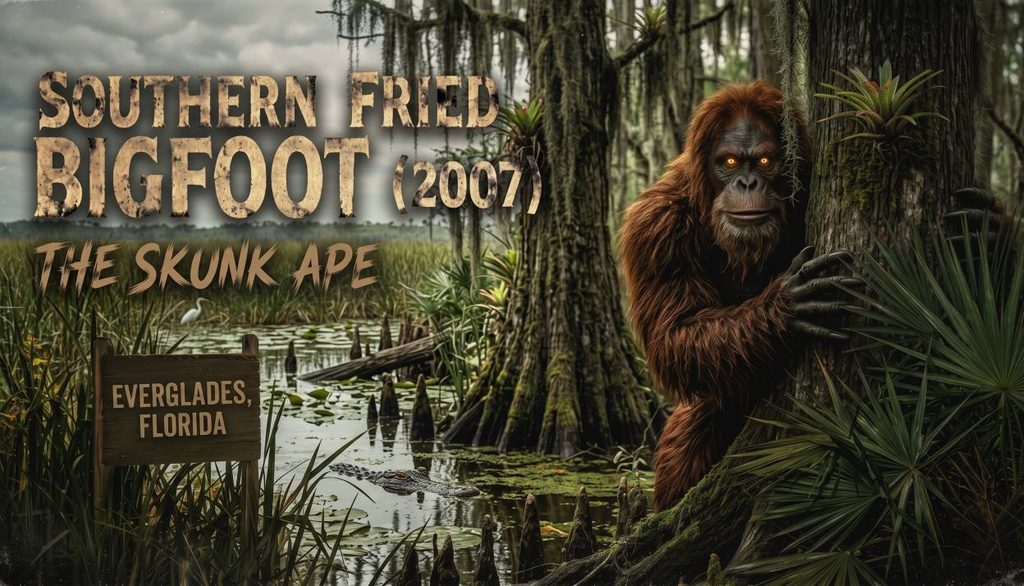
The final creature featured in Southern Fried Bigfoot takes us deep into the Florida Everglades, a landscape that feels almost tailor-made for a story about an elusive creature.
Vast wetlands stretch across southern Florida, supporting an extraordinary variety of wildlife, yet some parts of the Everglades remain remarkably remote.
Just a relatively short journey from the enormous population centres and busy streets of Miami, the landscape can quickly become something very different, a world of sawgrass, waterways and wilderness, where some areas are difficult or impossible to reach without an airboat.
And according to local legend, something else has been moving through that wilderness for generations.
The Skunk Ape is one of the best-known Bigfoot-type legends of the American South, particularly associated with Florida and the Everglades.
Its name comes from one of the creature’s most distinctive reported characteristics: an overwhelming, foul odour, frequently compared with the smell of a skunk.
Descriptions otherwise tend to portray it as a large, hairy, human-like creature, placing it firmly within the wider Southern tradition of wildman and Bigfoot reports explored throughout the documentary.
Sean takes us onto the waterways with Gary Matthews of Airboat USA, who discusses the descriptions he has heard from people familiar with the Everglades.
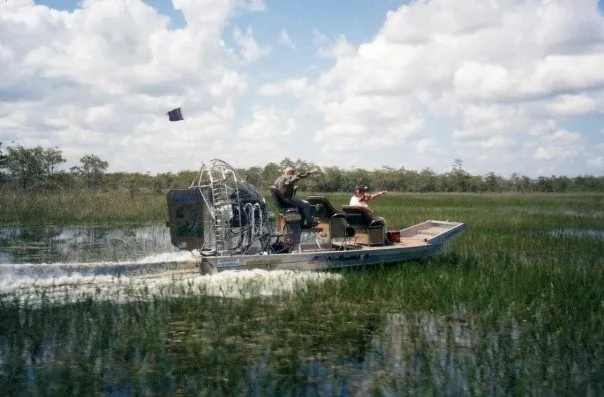
Director Sean Whitley shooting in the Florida Everglades with Gary Matthews of Airboat USA
The creature is typically described as enormous, weighing somewhere around 300 pounds, and, perhaps unsurprisingly given its name, carrying an unmistakable skunk-like smell.
Matthews also has an encounter of his own to recount.
On the west side of Frog Haven, he says he and others encountered something that immediately caught their attention: two enormous green eyes staring back at them from the darkness.
Matthews estimated that there appeared to be around ten inches between the eyes, giving him the impression that whatever they were looking at was extremely large. The creature then ducked down into the water.
What followed was a search lasting around an hour and a half, but despite looking through the area, they were unable to locate whatever had produced those eyes.
It is the sort of encounter that captures one of the central difficulties surrounding Skunk Ape reports: the Everglades is an enormous, complicated environment, and something can disappear surprisingly quickly once it leaves the immediate line of sight.
The documentary also turns to one of the most famous pieces of alleged Skunk Ape evidence: the Myakka photographs.
The images appeared in the early 2000s after a woman in Sarasota County, Florida, reportedly encountered a large, hairy creature around her property.
Photographs were subsequently sent anonymously to the Sarasota County Sheriff’s Office and later became known as the Myakka Skunk Ape photographs. Their identity and interpretation have remained debated ever since.
Loren Coleman recounts the story and examines the photographs as part of the documentary’s wider look at the Skunk Ape.
As with the other legends featured in Southern Fried Bigfoot, the case sits somewhere between folklore, eyewitness testimony and questions about what the available evidence can actually demonstrate.
And with the Everglades providing such an atmospheric final setting, the Skunk Ape brings Southern Fried Bigfoot back to the same question that has followed the documentary from Arkansas through Texas and Louisiana: what might people really be encountering when they report a large, unknown, human-like creature in the American wilderness?
From the Fouke Monster and Lake Worth Monster to the Honey Island Swamp Monster and Skunk Ape, Sean Whitley’s journey across the South doesn’t attempt to give every legend a simple answer.
Instead, it puts the stories, witnesses, landscapes and evidence together and allows the viewer to explore the possibilities for themselves.
Beyond the Legends
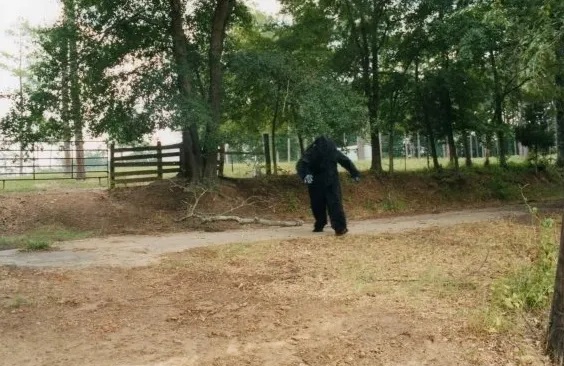
Lead Creature performer Matthew Fazio re-enacting a roadside sighting in Mt.Vernon Texas
Having explored four very different regional Bigfoot legends, Southern Fried Bigfoot goes much further, bringing together a fascinating range of Bigfoot authors, field researchers and investigators.
Among those featured are researchers such as Craig Woolheater, Chester Moore Jr., and Dr. John Bindernagel, who share their expertise, personal experiences and perspectives on the enduring mystery of Bigfoot.
Their accounts offer a glimpse into the different approaches, beliefs and experiences that continue to shape the search for evidence of an unknown North American primate.
We won’t reveal everything that follows, though. The remainder of the documentary is best discovered for yourself, as it takes viewers deeper into the people, experiences and ideas surrounding the Bigfoot phenomenon.
Whether you’re fascinated by the legendary creatures of the American South, regional Sasquatch traditions, eyewitness encounters, or the wider field of cryptozoology, Southern Fried Bigfoot offers plenty to explore.
For Bigfoot enthusiasts and anyone intrigued by the mysteries still hiding in the forests of North America, this is a documentary well worth seeking out.
Cryptid Legends Review
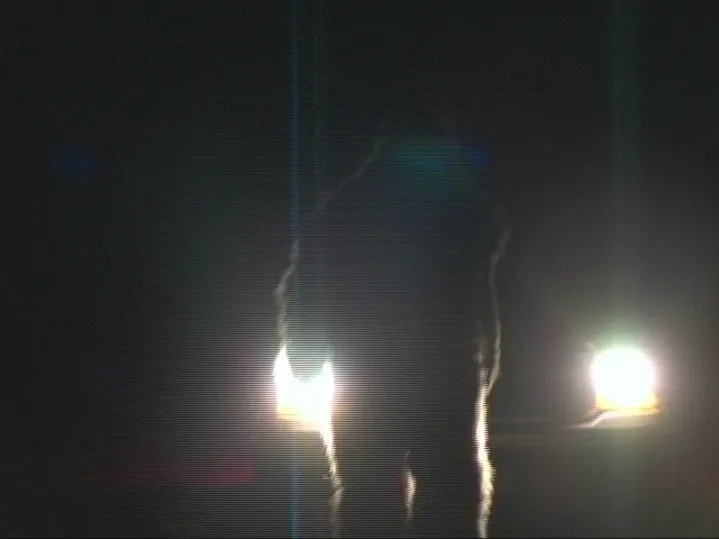
Night time Bigfoot sighting recreation from Southern Fried Bigfoot (2007)
Southern Fried Bigfoot is a must-see documentary for fans of Bigfoot, regional Sasquatch legends and cryptozoology in general.
It has that classic 2000s documentary feel that never really gets boring, travelling between locations, hearing from researchers and eyewitnesses, and exploring the stories behind some of America’s most enduring Bigfoot legends.
There’s something wonderfully nostalgic about that style of documentary, and Southern Fried Bigfoot captures that atmosphere perfectly.
Whether you’re already deep into the Bigfoot phenomenon or simply curious about the legends of the American South, it’s an enjoyable journey through the people, places and stories that continue to keep the mystery alive.
🎬 Southern Fried Bigfoot (2007) — Cryptid Cinema Profile
🏷️ Movie Information
🎬 Title: Southern Fried Bigfoot
📅 Release Year: 2007
🎥 Director: Sean Whitley
✍️ Writer: Sean Whitley
🎬 Producers: Sean Whitley & Mike Zeitzmann
🎭 Genre: Documentary / Mystery
⏱️ Runtime: Approximately 60 minutes
🌎 Country: United States
👣 Featured Cryptids: Bigfoot / Southern Sasquatch Legends
📍 Filming Locations: Texas, Louisiana, Arkansas & Florida
🎞️ Style: Documentary / Interviews / Dramatised Reconstructions
🌐 Official Website: Southern Fried Bigfoot
⭐ IMDb: Southern Fried Bigfoot (2007)
📺 Where to Watch
▶️ Tubi: Watch Free with Ads
▶️ YouTube Movies & TV: Available via the official Southern Fried Bigfoot streaming listing; availability varies by territory.
▶️ Fawesome: Available via the Fawesome app and Roku, free with ads.
▶️ Documentary Movies & TV by Fawesome: Available via the app and Roku, free with ads.
▶️ Stash – Free Documentaries on YouTube: Free with ads outside the US, Canada and Australia.
▶️ Bigfoot TV: Available via app and Roku, with ad-supported and subscription viewing.
▶️ OTT Studio: Listed by the official website as a streaming venue.
▶️ The B Stream: Available via app and online with subscription.
▶️ Relay: Available via app and online with subscription.
▶️ Xumo: Available via app and online, free with ads.
▶️ Popsy on Plex: Available via app and online, free with ads.
💿 DVD: Physical copies are available through the official website, including the one-hour documentary and approximately 45 minutes of extras.
Streaming availability can change by territory and over time. Check the official website’s Buy, Watch & Stream page for the latest options.