The Loch Ness Monster eDNA Study
Can Environmental DNA Solve the Mystery of Nessie?
An in-depth investigation into the world’s most famous cryptid, the revolutionary environmental DNA survey of Loch Ness, and what modern science discovered beneath Scotland’s deepest waters.
📖 Introduction
Few mysteries have captured the world’s imagination quite like the legend of the Loch Ness Monster.
Hidden among the rugged mountains and mist-covered glens of the Scottish Highlands lies a vast, dark freshwater loch that has inspired generations of explorers, scientists, sceptics, and believers alike.
For centuries, stories have circulated of an enormous creature lurking beneath its cold, peaty waters, a mysterious animal affectionately known around the world as Nessie.
Unlike many legendary monsters that exist only in folklore, the Loch Ness mystery occupies a unique place in modern history.
Since the early twentieth century, hundreds of eyewitnesses have claimed to see something extraordinary breaking the surface of the loch.
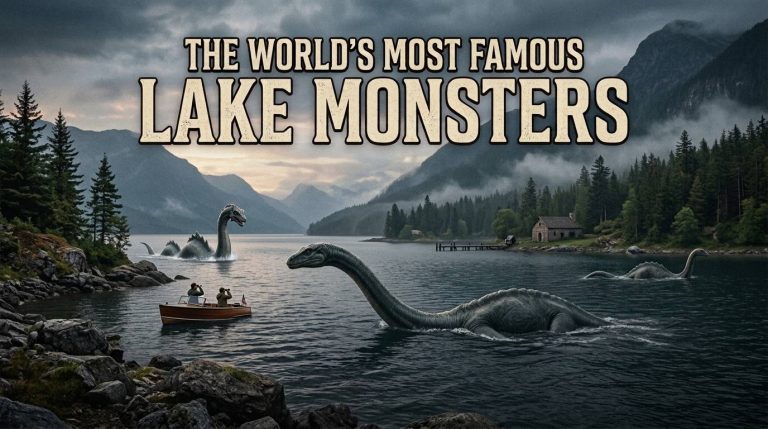
Descriptions vary, yet many tell of a long neck rising from the water, powerful humps gliding silently across the surface, or an immense dark shape moving beneath the waves before disappearing into the depths.
These reports have inspired newspaper headlines, documentaries, scientific expeditions, sonar surveys, underwater photography, and countless debates spanning nearly a century.
The legend itself stretches back even further. One of the earliest accounts is attributed to Saint Columba, whose seventh-century biography describes a fearsome aquatic beast encountered in the River Ness around AD 565.
Whether this ancient tale represents folklore, religious symbolism, or the first written reference to the creature remains a matter of interpretation, but it illustrates just how deeply the mystery has become woven into Scotland’s cultural heritage.
Despite decades of investigation, no expedition has ever recovered a body, skeleton, or unequivocal photograph capable of proving the existence of a large unknown animal inhabiting Loch Ness.
Nevertheless, advances in technology have continually transformed the search. Early investigators relied on eyewitness testimony and grainy photographs. Later expeditions introduced sonar, underwater cameras, remotely operated vehicles, and sophisticated mapping equipment. Each new generation of technology promised to reveal what previous searches had missed.
Then, in 2018, researchers attempted something entirely different.
Rather than searching for the creature itself, scientists searched for the microscopic biological traces that every living organism leaves behind.
Every fish, amphibian, reptile, mammal, bird, or microorganism continuously sheds tiny fragments of genetic material into its environment through skin cells, mucus, scales, waste, and decomposing tissue.
These invisible traces, known as environmental DNA (eDNA), can reveal what species are present in an ecosystem, even when the animals themselves remain hidden from view.
This revolutionary technique had already transformed wildlife conservation across the world, helping researchers detect endangered fish, elusive amphibians, invasive species, and rare aquatic mammals with remarkable sensitivity.
Could the same scientific method finally answer one of history’s greatest cryptozoological questions?
Led by geneticist Professor Neil Gemmell of the University of Otago, an international team of researchers embarked on one of the most ambitious biodiversity surveys ever conducted on Loch Ness.
Their goal was not to prove or disprove the legend, but to catalogue every detectable species living within the loch by analysing the DNA suspended in its waters.
The results would make headlines across the globe.
No giant reptile was detected.
No evidence supported the existence of a surviving plesiosaur.
Yet one unexpected finding reignited a different theory that continues to intrigue both scientists and cryptid enthusiasts today.
This Cryptid Legends Evidence File explores the expedition in detail, how environmental DNA works, how the samples were collected, what species were identified, why some long-standing hypotheses were challenged, and what the findings mean for the future of scientific cryptozoology.
Rather than asking what people believe lurks beneath the waters of Loch Ness, we will examine what modern genetics can, and cannot tell us about one of the world’s most enduring mysteries.
🌊 The History of the Loch Ness Monster Mystery

Long before scientists began analysing DNA from the waters of Loch Ness, stories of a mysterious creature had already become woven into Scottish folklore.
Stretching over 23 miles (37 km) through the Scottish Highlands and reaching depths of around 230 metres (755 feet), Loch Ness is one of the largest bodies of freshwater in the United Kingdom.
Its dark, peat-stained waters, steep underwater slopes and immense depth have made it the perfect setting for one of the world’s greatest unsolved mysteries.
📜 The Earliest Recorded Sighting (6th Century)
The earliest written account often associated with the Loch Ness Monster dates to around 565 AD in The Life of Saint Columba, written by Adomnán of Iona approximately a century later.
According to the account, Saint Columba encountered local people burying a man who had reportedly been attacked by a “water beast” in the River Ness. Columba is said to have ordered one of his followers to cross the river, whereupon the creature approached before retreating after Columba made the sign of the cross.
While many historians regard the story as a religious miracle narrative rather than evidence of an unknown animal, it remains the earliest surviving written reference to a mysterious aquatic creature connected with the Loch Ness region.
🚗 The Modern Legend Begins (1933)
Although stories persisted locally for centuries, the modern Loch Ness Monster phenomenon truly began in 1933.
That year, George and Aldie Spicer reported seeing what they described as an enormous animal with a long neck crossing the road in front of their car before disappearing into Loch Ness.
Their account attracted widespread newspaper coverage and sparked public fascination around the world. Within months, numerous additional sightings were reported, transforming Nessie from a local legend into an international mystery.
📸 The “Surgeon’s Photograph” (1934)
Perhaps the most famous image ever associated with Nessie appeared in 1934.
Taken by London physician Dr. Robert Kenneth Wilson, the photograph appeared to show a small head and long neck emerging from the water.
For decades it was regarded as the strongest photographic evidence supporting the existence of the Loch Ness Monster and became one of the most recognisable images in cryptozoological history.
However, in 1994, participants involved in creating the image confessed that it had been an elaborate hoax using a small model attached to a toy submarine. Today, the “Surgeon’s Photograph” is widely accepted as fraudulent, although it remains an important part of the legend’s history.
🔍 Scientific Interest Grows

As reports continued throughout the twentieth century, Loch Ness became the focus of increasingly sophisticated scientific investigations.
Unlike many folklore traditions, Nessie attracted researchers who attempted to evaluate the claims using modern technology rather than relying solely on eyewitness testimony.
This shift marked the beginning of one of the longest-running wildlife investigations ever undertaken.
📡 Sonar Surveys
One of the most important developments was the introduction of sonar technology.
Beginning in the 1950s and 1960s, several researchers used sonar equipment to search beneath the surface of Loch Ness for unusually large moving objects.
Some surveys reported unexplained sonar contacts that generated excitement among Nessie enthusiasts. However, these detections were generally brief, could not be repeated under controlled conditions and were never linked to a confirmed biological source.
As sonar technology improved over subsequent decades, no survey has produced evidence widely accepted as demonstrating the existence of a large unknown animal living permanently within the loch.
🚤 Operation Deepscan (1987)
One of the largest organised searches ever undertaken was Operation Deepscan in 1987.
Twenty-four boats equipped with sophisticated echo-sounding equipment formed a line across Loch Ness and slowly travelled the length of the loch, scanning almost its entire width simultaneously.
Although several unusual sonar readings were recorded, none could be conclusively identified as a previously unknown large animal.
Despite attracting international media attention, the expedition ultimately failed to provide definitive evidence for Nessie.
🤖 Modern Technology
During the twenty-first century, researchers have continued to investigate Loch Ness using increasingly advanced techniques.
High-resolution sonar systems, underwater cameras, remotely operated vehicles (ROVs), drones and satellite mapping have all been employed in attempts to document unusual animals or unexplained underwater features.
While these investigations have greatly improved our understanding of the loch’s underwater environment, none has produced scientifically accepted evidence confirming the existence of a large unknown vertebrate.
🧬 A New Era of Investigation
By the late 2010s, scientists recognised that searching with cameras and sonar alone might never fully resolve the mystery.
Instead of looking directly for an animal, researchers asked a different question:
Could any large creature living in Loch Ness leave behind detectable traces of its DNA?
This simple but revolutionary idea led to one of the most ambitious scientific investigations ever undertaken into a cryptid legend, the Loch Ness environmental DNA (eDNA) study.
🧬 What is Environmental DNA (eDNA)?
After decades of eyewitness accounts, photographs, sonar surveys and underwater searches, scientists began asking a completely different question:
Instead of trying to find a mysterious animal, could they simply look for its DNA?
The answer lies in a technique known as Environmental DNA, or eDNA.
In simple terms, every living organism leaves behind tiny traces of genetic material in its environment. Fish, amphibians, mammals, birds and even microorganisms constantly shed DNA through skin cells, mucus, scales, hair, faeces and other biological material.
These microscopic fragments drift through the water before eventually breaking down over time.
By collecting water samples and analysing the DNA they contain, scientists can identify many of the species living in a lake or river without ever seeing the animals themselves.
Think of it as nature’s fingerprint. Even if an animal remains hidden beneath the surface, it may still leave behind genetic evidence of its presence.
Today, eDNA has become an important tool in wildlife conservation and ecology. It is used around the world to monitor endangered species, detect invasive organisms, study biodiversity and survey aquatic ecosystems far more efficiently than traditional methods alone.
For the Loch Ness investigation, researchers wondered whether this same technology could finally help answer one of cryptozoology’s greatest mysteries.
🧪 How the Loch Ness eDNA Expedition Was Carried Out

The Loch Ness environmental DNA project was led by Professor Neil Gemmell, a geneticist from the University of Otago in New Zealand, together with an international team of researchers specialising in genetics, ecology and freshwater biology.
Unlike previous expeditions that relied on sonar, underwater cameras or eyewitness reports, the team’s approach focused entirely on collecting genetic evidence from the loch itself.
During June 2018, researchers travelled the length of Loch Ness, collecting water samples from multiple locations and at different depths. Sampling the loch in this way allowed them to build a comprehensive picture of the organisms living throughout the ecosystem rather than relying on observations from a single area.
To avoid contamination, strict scientific procedures were followed throughout the expedition. Sterile equipment was used, samples were carefully labelled and preserved, and every stage of the collection process was designed to ensure the DNA accurately represented the environment in which it was collected.
Back in the laboratory, the water samples were filtered to capture tiny fragments of environmental DNA. Scientists then extracted this genetic material and used advanced DNA sequencing techniques to read millions of small DNA fragments.
These sequences were compared against international genetic reference databases containing DNA from thousands of known species. By matching the genetic “barcodes,” researchers could identify which animals had recently been present in Loch Ness.
Rather than searching for Nessie directly, the expedition aimed to create a complete genetic inventory of the loch’s biodiversity. If a large unknown animal regularly inhabited Loch Ness and shed sufficient DNA into the water, there was a reasonable possibility that traces of its genetic material might also be detected.
It was one of the first times that one of the world’s most famous cryptid legends had been investigated using cutting-edge molecular genetics instead of traditional search techniques.
🧬 What Species Were Detected?

After extracting and sequencing millions of tiny fragments of environmental DNA from the water samples, the research team began comparing their results with international DNA reference databases.
Rather than discovering evidence of an unknown prehistoric creature, the scientists found something equally valuable, a detailed snapshot of the wildlife currently inhabiting Loch Ness.
The results showed a healthy and diverse freshwater ecosystem containing many of the species scientists would expect to find in one of Scotland’s largest lochs.
🐟 Fish
Fish DNA made up a significant proportion of the genetic material detected during the survey.
Among the species identified were:
- European eel (Anguilla anguilla)
- Atlantic salmon (Salmo salar)
- Brown trout (Salmo trutta)
- Three-spined stickleback (Gasterosteus aculeatus)
- Arctic char (Salvelinus alpinus)
These findings were entirely consistent with what is already known about the fish populations living within Loch Ness and confirmed that environmental DNA could successfully identify species without the need to capture or directly observe them.
🦆 Birds
The analysis also detected DNA from several bird species.
This was not unexpected, as birds regularly visit the loch to feed, nest and migrate through the area. Waterfowl and other birds naturally leave traces of DNA in the water through feathers, skin cells and droppings.
Their presence demonstrated how eDNA can provide information about animals that spend only part of their time in aquatic environments.
🦌 Mammals
Researchers also detected DNA from mammals living around the loch.
Some of this genetic material likely came from animals drinking at the shoreline, swimming across the water or entering streams that feed into the loch.
Human DNA was also detected, which is entirely normal given the villages, tourism, boating activity and scientific fieldwork taking place around Loch Ness.
🦠 Microorganisms and Aquatic Life
As expected, the vast majority of genetic material belonged to microscopic organisms that form the foundation of the loch’s ecosystem.
Bacteria, algae, fungi and countless other tiny organisms play essential roles in nutrient cycling and maintaining the health of freshwater environments.
Although these organisms rarely attract public attention, they are fundamental to the survival of every larger species living within the loch.
🧬 What Was Not Detected?
Perhaps the most widely discussed result was what the researchers didn’t find.
The study found no environmental DNA evidence supporting the presence of a resident population of large unknown reptiles, amphibians or other previously undiscovered aquatic vertebrates.
In particular, there was no genetic evidence consistent with the popular idea that Nessie might be a surviving plesiosaur or another prehistoric marine reptile.
While environmental DNA cannot absolutely prove that an organism does not exist, the findings strongly suggested that if such a large animal were permanently living within Loch Ness, it was not shedding detectable DNA into the water at the time of sampling.
For many scientists, this made the existence of a resident population of large unknown animals considerably less likely.
🌍 More Than Just a Cryptid Investigation
Although much of the public focused on whether Nessie had been found, the expedition achieved something much broader.
The study demonstrated how environmental DNA can rapidly catalogue biodiversity within an entire freshwater ecosystem without disturbing wildlife.
This information has important applications in conservation biology, fisheries management, invasive species monitoring and ecological research.
In many ways, the Loch Ness expedition became a showcase for how modern genetics can help us understand the natural world—not only famous mysteries.
🐍 An Unexpected Discovery…
One result, however, stood out from all the others.
The researchers found surprisingly large amounts of European eel DNA throughout Loch Ness.
While this certainly did not prove that giant eels exist, it prompted the team to ask an intriguing scientific question:
Could unusually large eels explain at least some of the reported sightings of the Loch Ness Monster?
This idea would soon become known as the Giant Eel Hypothesis.
❌ Common Misconceptions About the Loch Ness eDNA Study
One of the biggest misconceptions is that the study was designed specifically to “prove or disprove” the existence of the Loch Ness Monster.
In reality, the research team wasn’t hunting for a creature at all. They were building a biological snapshot of the entire ecosystem using environmental DNA (eDNA), a method that detects genetic traces shed by living organisms into water.
Another frequent misunderstanding is the idea that “no monster DNA was found, therefore the mystery is solved.”
That conclusion oversimplifies what eDNA can and cannot do. The study can tell us what species are present in the water at the time of sampling—but it cannot detect organisms that are extremely rare, transient, or no longer shedding DNA.
There’s also confusion around the idea that eDNA acts like a complete “species scanner.” It doesn’t. It’s more like reading fragments of a much larger biological story.
🧬 Limitations of Environmental DNA (eDNA)
Although eDNA is a powerful tool in modern ecology, it has clear limits that are important when interpreting results.
First, DNA degrades over time. Environmental conditions such as sunlight, temperature, and microbial activity can break genetic material down quickly. This means eDNA generally reflects recent or nearby presence, not historical populations or long-term residency.
Second, water movement can blur the picture. In a large system like Loch Ness, currents and inflows can transport DNA from other connected environments. This makes it difficult to pinpoint exactly where an organism was located.
Third, detection depends heavily on reference databases. If a species has no genetic profile in the database, its DNA may go unidentified or be misclassified. This is particularly relevant for rare, extinct, or poorly studied organisms.
Finally, eDNA cannot distinguish between living animals and biological material left behind (like scales, skin cells, feces, or decaying matter). It confirms presence, but not behaviour, size, or even abundance with high precision.
In short, eDNA is a tool for ecological probability—not definitive visual confirmation.
🌊 What This Means for Modern Cryptozoology
For cryptozoology, the implications are significant, but not necessarily disappointing.
Studies like the Loch Ness survey show that modern science is increasingly capable of ruling in or ruling out large unknown animals in a given ecosystem.
The absence of unexpected large vertebrate DNA in Loch Ness suggests that the lake is more consistent with known species such as eels, fish, and marine mammals that occasionally enter the system.
However, this does not entirely close the door on interpretation. Instead, it reframes the conversation: if something unusual is being reported, it is more likely to involve misidentification, rare known species, optical effects, or folklore amplification rather than an undiscovered giant organism.
That’s where hypotheses like the “giant eel” idea emerged in discussions following the study. While intriguing, no genetic evidence from the survey confirmed anything beyond known eel populations, which themselves are already part of the lake’s ecosystem.
For modern cryptozoology, eDNA doesn’t end the mystery, it refines it. It pushes investigations away from purely anecdotal sightings and toward testable biological frameworks. In that sense, the field is slowly shifting from legend-based exploration to data-driven ecology.
🔍 Closing Perspective
The Loch Ness eDNA project didn’t “find the monster,” but it did something arguably more valuable: it mapped a hidden biological world in extraordinary detail. And in doing so, it showed how modern science can engage with ancient mysteries without needing to dismiss them outright.
The result is a new kind of balance,, where folklore, ecology, and genetics can coexist in the same conversation, even if the answers aren’t as sensational as the legends themselves.
But the absence of a discovery does not necessarily mean the end of the legend. Loch Ness remains a vast, mysterious environment, and for many, the possibility that something unknown could still be hidden beneath its waters is exactly what keeps the search alive.